
Aircraft Galley Equipment Guide
How an aircraft galley is built around standard trolleys and inserts, 115 V 400 Hz power, weight and airworthiness certification, and how that differs from a marine galley.
Read guideAviation
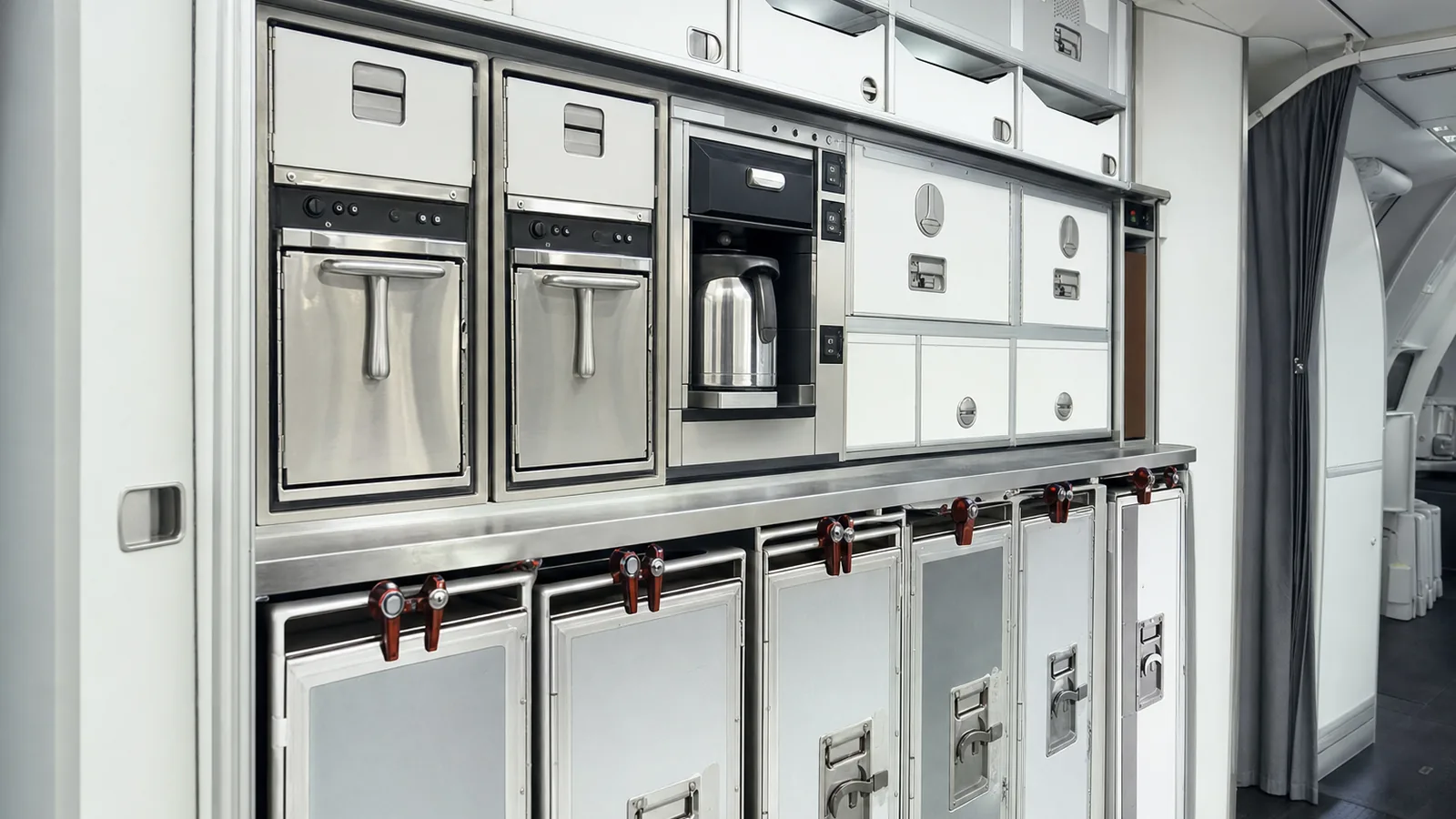
Aircraft galley equipment covers the trolleys, standard containers, galley inserts and galley structure that store, heat, chill and serve food and drink on board an aircraft, built to aviation standards and 115 V 400 Hz power.

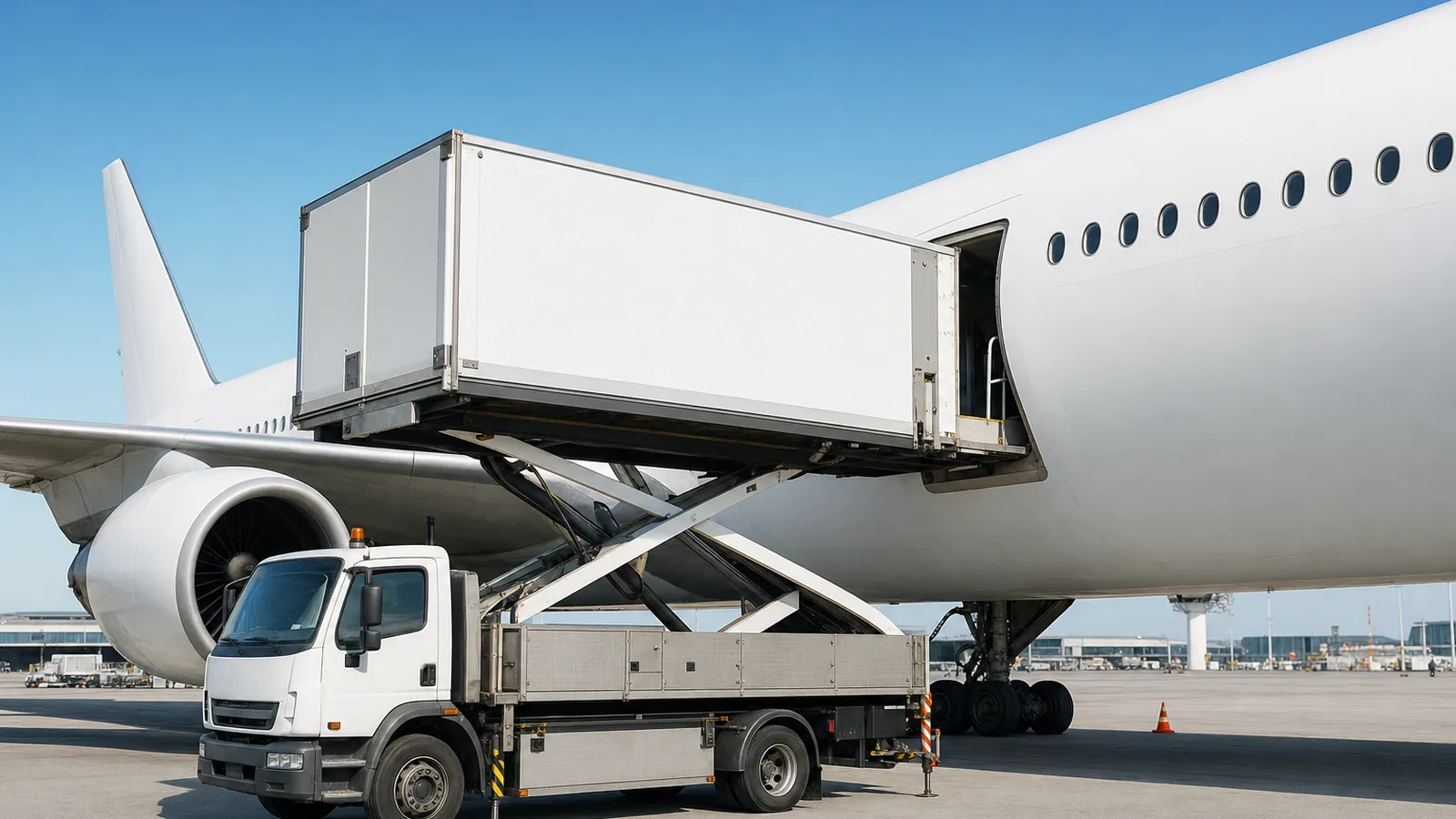
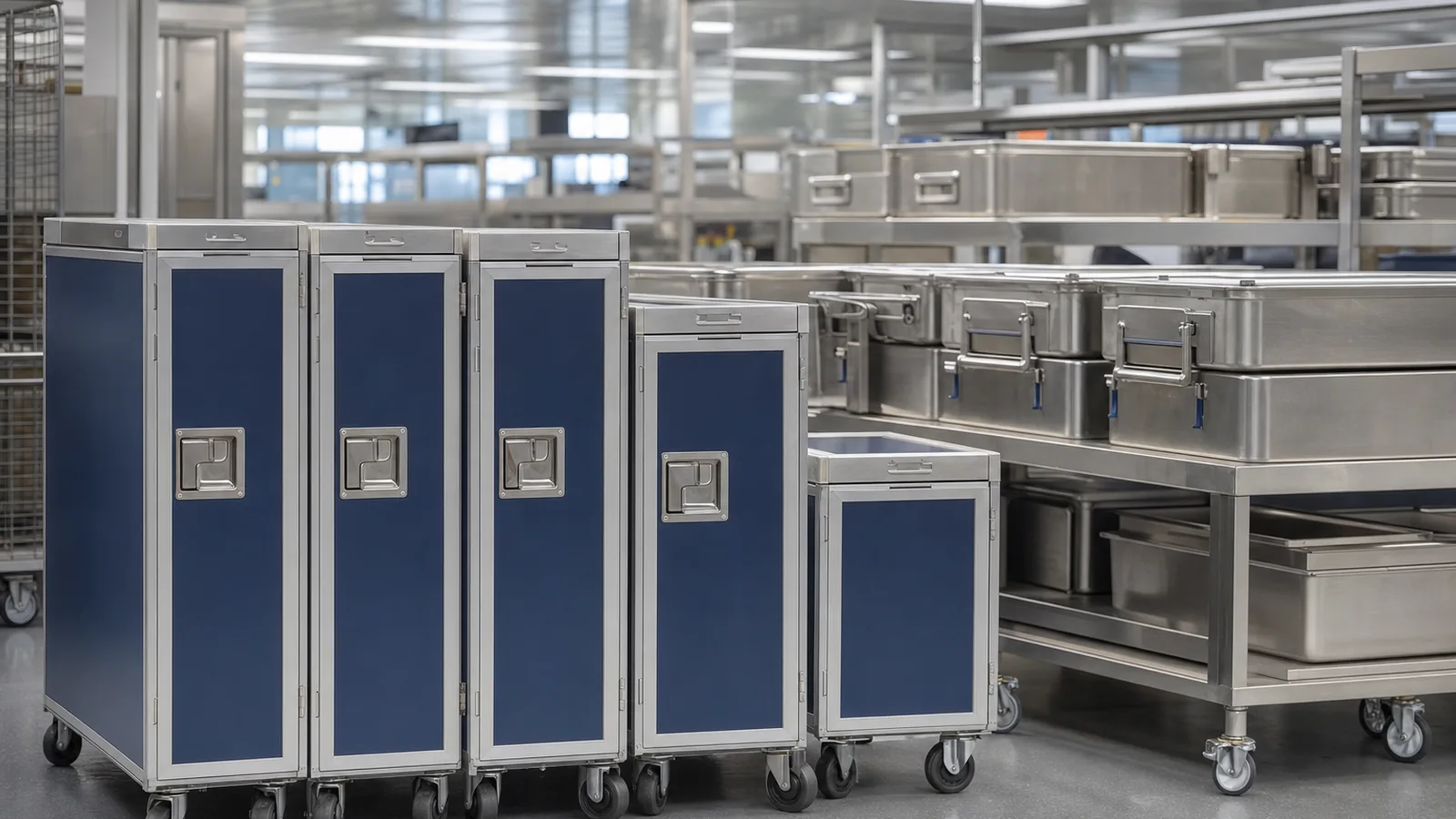
An aircraft galley does the same job as any kitchen: it stores food and drink, heats it, keeps it cold, serves it and brings the waste back. The way it does that job is different. Most of the food served in an aircraft cabin is prepared on the ground by a caterer, loaded into trolleys and containers, rolled aboard during the turnaround and heated or chilled in flight. The galley itself is a certified part of the aircraft, bolted to the cabin floor, and every kilogram in it is carried on every sector.
Aircraft galley equipment therefore falls into four groups:
Because airlines, caterers and galley manufacturers all handle the same equipment, almost every interface in an aircraft galley is standardised.
Two trolley standards dominate. ATLAS, named after the carriers that originated it (Alitalia, TAP, Lufthansa, Air France and Sabena), is used by about 80 % of airlines. KSSU is named after KLM, Swissair, SAS and UTA. Both trolleys are about 103 cm tall and about 30 cm wide, but a full-size KSSU trolley is about 85 cm deep against about 81 cm for ATLAS. Accessories for one standard do not fit the other, so an airline's trolleys, its caterers' equipment and its galleys have to agree.
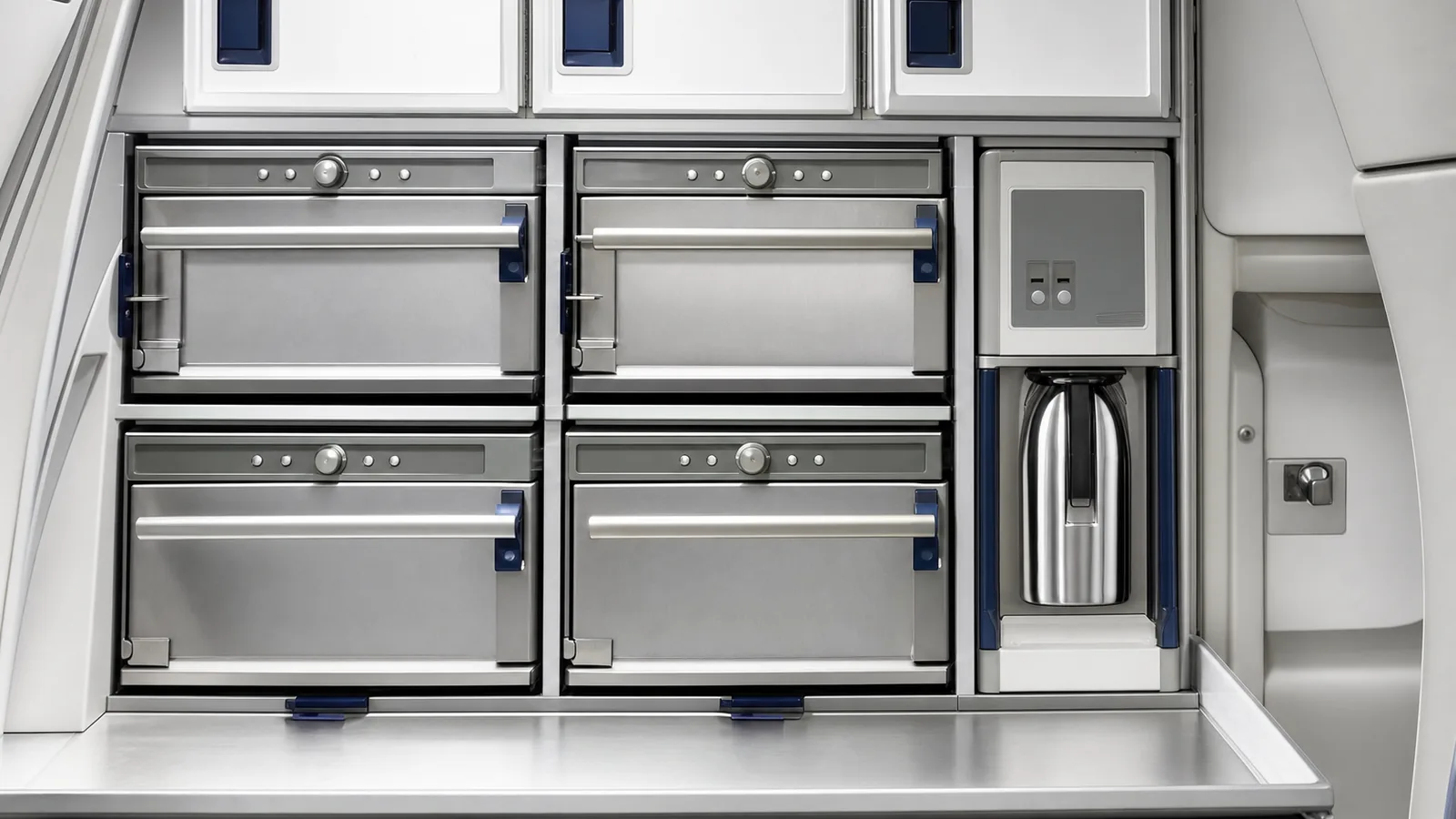
Ovens, beverage makers and refrigeration units are standardised through ARINC 810, which defines their physical interfaces: dimensions, installation, the electrical connector and cable, the potable water coupling and the waste water interface. ARINC 812 defines their data interface over a Controller Area Network bus. An insert is specified by its envelope, connections and data interface as much as by what it does.
Aircraft electrical systems supply 115 V AC at 400 Hz. The higher frequency allows smaller, lighter alternators and transformers than 50 or 60 Hz equipment, at the cost of larger voltage drops, which the short distances on an aircraft make acceptable. Galley inserts are built for that supply and cannot be swapped for ground or marine appliances.
Aircraft galley equipment is part of the aircraft's airworthiness. In the United States, FAA technical standard order TSO-C175 covers galley carts, containers and associated components and adopts SAE AS8056 as its minimum performance standard. On aeroplanes with 20 or more passenger seats, 14 CFR 25.853 sets flammability tests for galley structure, including the exposed surfaces of stowed carts and standard containers. 14 CFR 25.561 sets the emergency landing loads, including 9.0 g forward, that items of mass in the cabin must be restrained against. The regulatory detail is covered on the commercial aircraft galley equipment page.
Weight shapes everything else. It is the reason for 400 Hz power, lightweight trolleys, standard containers filled on the ground and the preference for heating prepared food rather than cooking from raw. It is also why aircraft galleys are designed as integrated structures by specialist manufacturers, with inserts, trolleys and services agreed together.
The aircraft galley equipment list sets out the full inventory of a working aircraft galley by function.
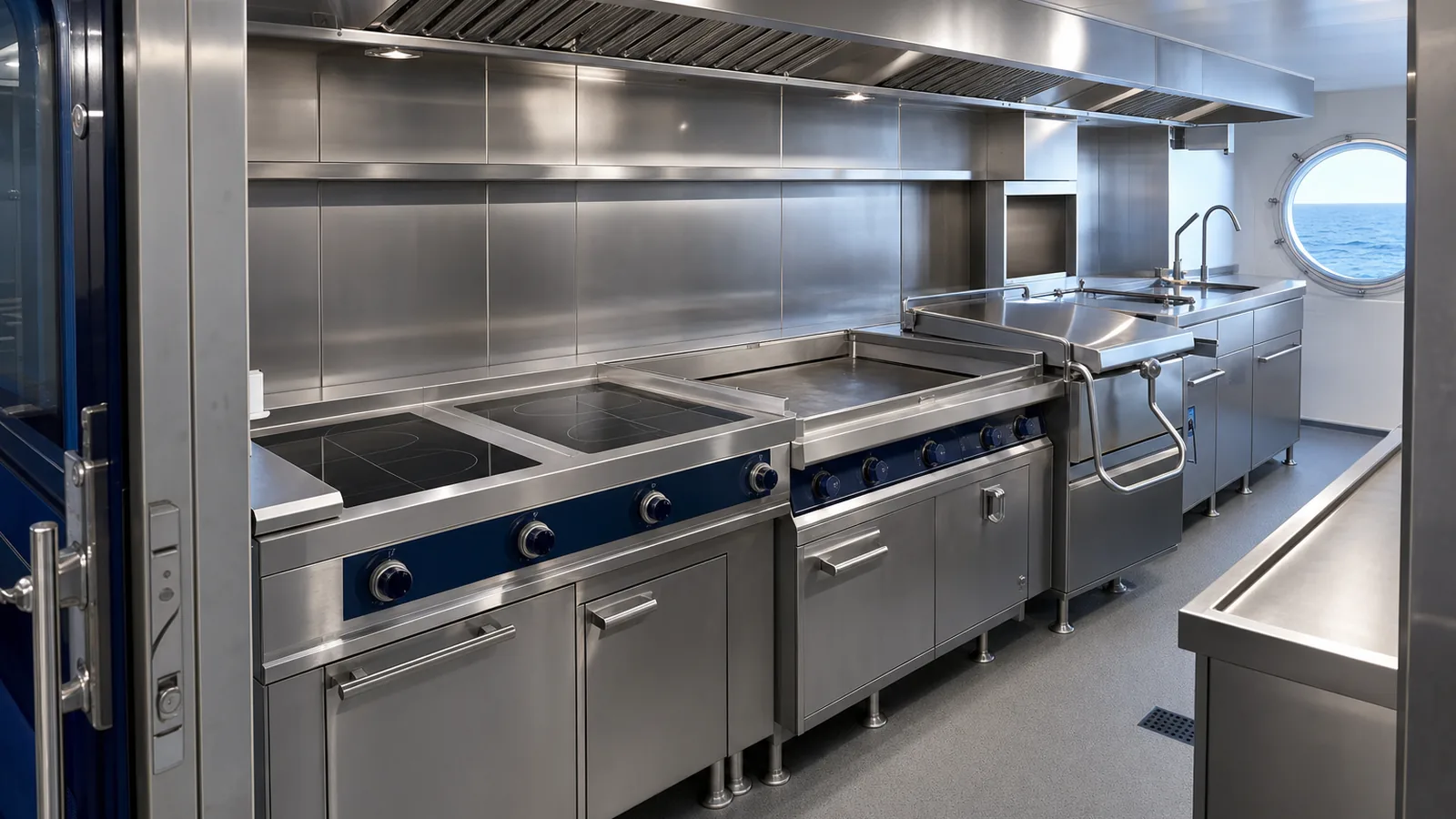
This site is built around marine galley equipment, and the two are often confused because they share a name. They differ in almost every specification:
The equipment listed in our product catalogue is marine galley equipment and is not certified for installation in an aircraft. For the marine side, see marine galley equipment.
Aviation items are quoted against the information that identifies them. When you send an enquiry, include the aircraft type, the trolley standard (ATLAS or KSSU), the part number or manufacturer reference of each item, the required quantity and any operator or caterer specification. The aircraft galley equipment guide explains the standards in more depth.
It is the equipment that stores, heats, chills and serves food and drink on an aircraft: trolleys, standard containers, galley inserts such as ovens and beverage makers, and the galley structure with its power, water and waste connections.
Both are about 103 cm tall and about 30 cm wide, but a full-size KSSU trolley is about 85 cm deep against about 81 cm for ATLAS. ATLAS is used by about 80 % of airlines, and accessories for one standard do not fit the other.
Aircraft galley inserts run on the aircraft's 115 V AC, 400 Hz supply. The higher frequency allows lighter alternators and transformers, which is why ground and marine appliances cannot be used instead.
No. Aircraft galley equipment is part of the aircraft's certification and is built to aviation interface standards and 400 Hz power. Marine galley equipment is built for a ship's supply and is not certified for aircraft installation.
How an aircraft galley is built around standard trolleys and inserts, 115 V 400 Hz power, weight and airworthiness certification, and how that differs from a marine galley.
Read guideWhat the term covers, how a ship or aircraft galley differs from a shore kitchen, and the equipment groups that make up a working galley.
Read guideThe constraints that actually decide a galley specification — service, power, space, water, heat, motion, materials and compliance — worked through in the order they bite.
Read guideSend us your equipment list, drawing or specification and our team will come back with pricing and lead times.