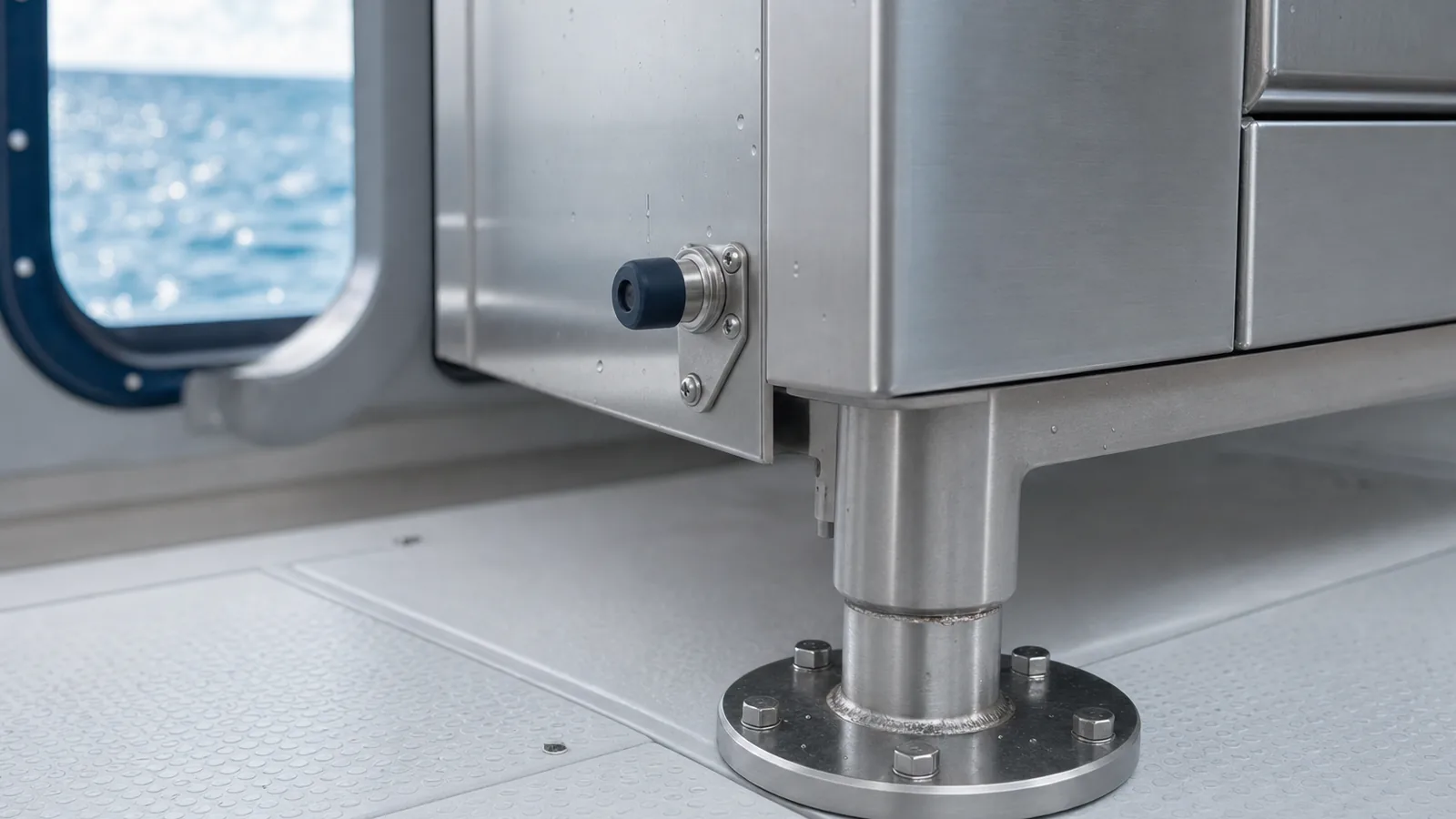

Miele Tumble Dryer PDR 944 [EL SOM] – 3 AC 230V 50/60HZ, Stainless steel
Benchmark Performance Plus marine tumble dryer PDR 944, 800 l drum and 37.2 l/h evaporation at 3 AC 230V 50/60HZ, electric exhaust-air design.
37.7 kW
Vented and heat-pump tumble dryers for ships. Heat-pump models recirculate their own air, which matters where the laundry shares an already loaded HVAC system and external venting is limited.
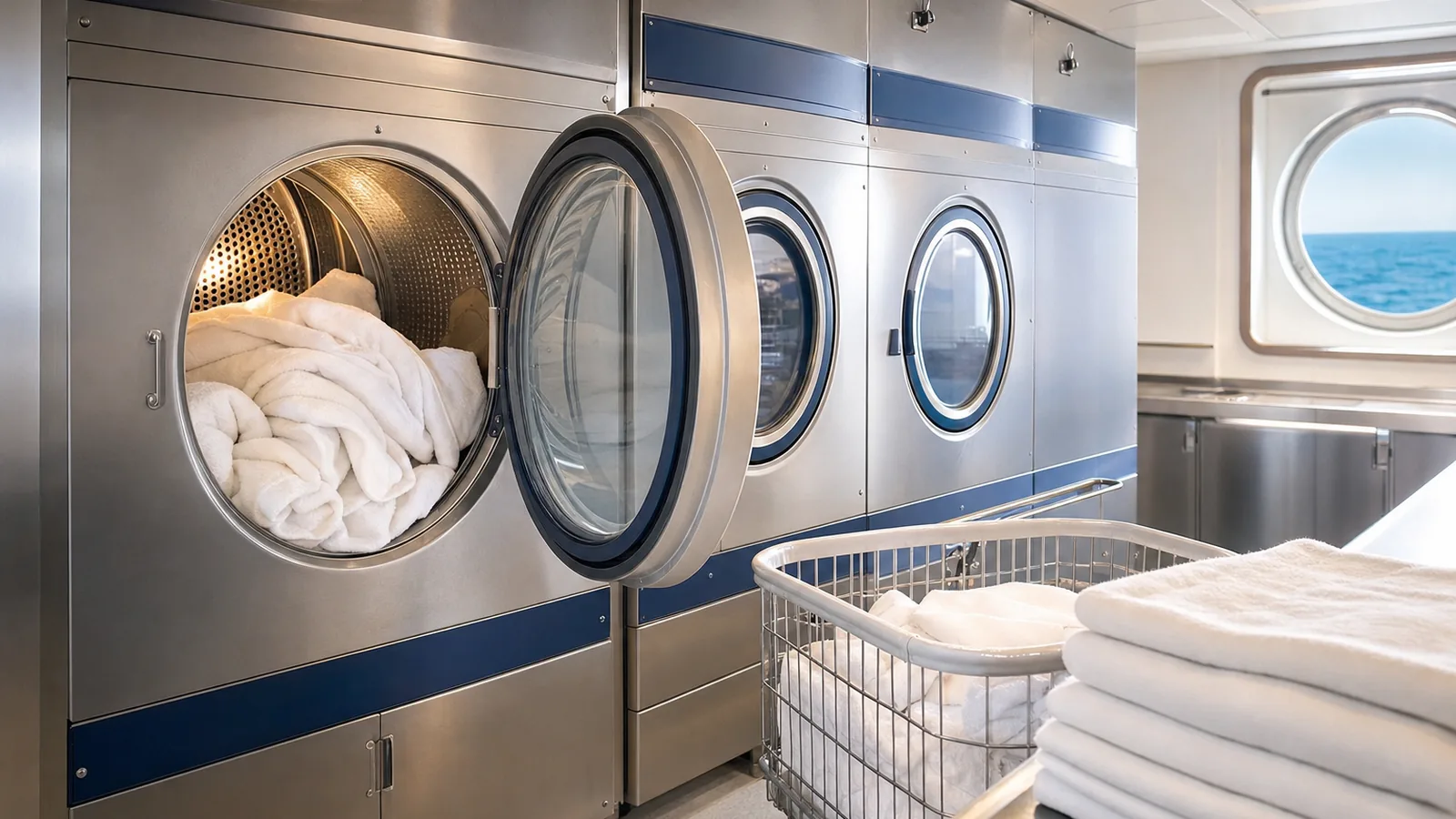
Benchmark Performance Plus marine tumble dryer PDR 944, 800 l drum and 37.2 l/h evaporation at 3 AC 230V 50/60HZ, electric exhaust-air design.
44 kg Benchmark Performance Plus exhaust-air marine tumble dryer, 800 l drum, 3 AC 200–208 V 50–60 Hz, M Touch Pro controls. PDR 944 [EL SOM].
Benchmark PDR 944 vented marine dryer, 800 l drum for 32–44 kg loads, 36 kW electric, 3N AC 400V 50/60Hz, stainless-steel front.
Benchmark PDR 944 EL SOM vented dryer, 800 l drum and 37.2 l/h evaporation at 3 AC 400V 50/60Hz for offshore and shipboard laundries.
Miele PDR 944 [EL SOM] Benchmark exhaust-air dryer, 800 l drum for 32–44 kg loads on 3 AC 440V 50/60HZ.
Miele PDR 928 [EL SOM] Benchmark marine dryer, 500 l drum, up to 28 kg at 1:18, 3 AC 230V 50/60HZ.
Exhaust-air marine tumble dryer, 500 l drum and 28 kg load at 1:18 ratio, Benchmark Performance Plus PDR 928 [EL SOM].
Benchmark PDR 928 [EL SOM] exhaust-air marine dryer, 500 l drum and 28 kg capacity at 1:18 load ratio, 3 AC 400V 50/60HZ.
Miele PDR 928 EL SOM Benchmark exhaust dryer, 28 kg at 1:18 in a 500 l drum, 3 AC 440V 50/60HZ.
Benchmark PDR 922 [EL SOM] marine dryer, 400 l drum for up to 22 kg loads, 23.5 kW at 3 AC 230V 50/60HZ, exhaust air system.
22 kg Benchmark Performance Plus marine vented dryer, 400 l drum, 3 AC 400V 50/60HZ, M Touch Pro control. PDR 922 [EL SOM].
Benchmark Performance Plus marine tumble dryer PDR 922 EL SOM, 22 kg load at 400 l drum volume, 3N AC 400 V 50/60 Hz exhaust air.
Benchmark PDR 922 [EL SOM] marine tumble dryer, 22 kg at 1:18 load ratio, 400 l drum, 3 AC 400V 50/60HZ, front in stainless steel.
16–22 kg Benchmark Performance Plus vented dryer, 400 l drum, 3 AC 440V 50/60HZ, PDR 922 [EL SOM] for offshore and shipboard use.
Miele Benchmark PDR 918 EL SOM marine exhaust-air dryer, 18 kg at 1:18 in a 325 l drum, 18.6 kW on 3 AC 230 V 50/60 Hz.
Benchmark Performance Plus exhaust-air dryer, 18 kg at 1:18 with 325 l drum and 23 min programme. Miele PDR 918 [EL SOM] 11911190.
Benchmark PDR 918 [EL SOM] marine exhaust‑air dryer, 18 kg at 1:18, 325 l drum on 3N AC 400V 50/60HZ, 18.6 kW.
Benchmark PDR 918 EL SOM marine dryer, 18 kg load at 325 l drum volume, 18.6 kW exhaust-air unit on 3 AC 400V 50/60HZ.
Benchmark PDR 918 [EL SOM] marine exhaust-air dryer, 18 kg load at 325 l drum volume, 3 AC 440V 50/60HZ, with M Touch Pro controls.
Benchmark Performance Plus marine tumble dryer PDR 914, 250 l drum for up to 14 kg at 0.51 kWh/kg, 3 AC 230 V 50/60 Hz.
Benchmark PDR 914 exhaust-air dryer, 14 kg at 1:18 load ratio, 250 l drum, 3 AC 400V 50/60HZ, stainless-steel front.
Benchmark PDR 914 exhaust-air marine dryer with 250 l drum, up to 14 kg at 1:18 load ratio on 3N AC 400 V 50/60 Hz.
Miele Benchmark PDR 914 [EL SOM] exhaust‑air dryer, 250 l drum, 24 min cycle at 3 AC 400V 50/60HZ for marine use.
Benchmark Performance Plus marine vented dryer, 14 kg at 1:18 in a 250 l drum, 24 min cycle on 3 AC 440V 50/60HZ.
Most of the work on this page is done by the Miele Benchmark series. These dryers cover electrical powers from 4.6 to 37.7 kW, drum volumes from 180 to 800 litres and widths from 700 to 1206 mm. Where stated, Benchmark loads run up to 44 kg, with net weights as high as 294.3 kg, so they are a structural item in the laundry, not a movable appliance.
On a vessel these figures translate into deck loading and service routing questions before model choice. The largest, a 37.7 kW PDR 944 on 400 V at 50/60 Hz, needs planning around the existing switchboard, and its footprint and weight have to sit inside the laundry’s coaming and stiffener pattern. Benchmark models also all carry “marine approved”, “offshore specified”, “network connectable”, “payment system ready” and “energy management ready” flags, which matters if the operator wants central consumption logging or token-based crew use.
The Little Giants series sits at the small end of this page: 1.2 to 6.4 kW connected load, 130 litre drum and 7 to 8 kg rated load across all models, in a width band from 596 to 606 mm and net weights from 49 to 72 kg. That footprint fits laundries built around standard 600 mm modules, narrow corridors and stacked washer-dryer arrangements.
In electrical terms Little Giants give the naval architect more options. Supply voltages include 208–240 V on some units, 230 V, 400 V and 400–480 V, with 60 Hz on most of the series and 50 Hz on a majority. That allows these dryers to follow the vessel’s system design instead of forcing a special transformer. They are all marine approved, offshore specified, network connectable and payment system ready, while energy management readiness appears on a subset where tighter consumption control is required.
The category splits into vented and heat-pump dryers, with most listings vented and six models specified as heat pump with no vent. Vented units push their moist exhaust out through ductwork sized to the machine, while heat-pump models keep a closed air loop and reject their moisture through a condensate stream. For a ship laundry that is already struggling with HVAC capacity, the difference between an exhaust duct and a drain line defines the installation route.
Heat-pump dryers on this page include the 7 kg PDR 507 HP and 8 kg PDR 908 HP. Removing the exhaust duct removes a hull or superstructure penetration and a duct run through fire zones, at the cost of a condensate drain, which is often the easier route on a vessel where the laundry shares air-handling with accommodation.
Across all 42 products the electrical spread runs from 1.2 to 37.7 kW, with published supply voltages including 230 V, 400 V, 400–480 V, 440 V and 208–240 V. Supply frequency covers 50 Hz on most models and 60 Hz on almost all, with Benchmark specifically carrying both 50 and 60 Hz across its range. Every Benchmark dryer names both frequencies, which makes that series the simpler choice for a fleet running both.
Physically, widths start at 596 mm and run through to 1206 mm. Drum volumes move from 130 litres on Little Giants to 800 litres on the largest Benchmark machines, and stated loads where given sit between 7 and 44 kg. Net weight ranges from 49 to 294.3 kg, so the foundation needs to consider not just the footprint but also the load from a rotating drum in a seaway.
This tumble dryer page is the right place for specifying how washed laundry is dried, but it does not cover the upstream and downstream parts of the process. If the project needs to size washer-extractors to feed these dryers, the Washing Machines category carries the Miele washer-extractors from the same Little Giants and Benchmark series. If the requirement is finishing flatwork after drying, the rotary ironers in the Ironers category are the relevant equipment, and where deck area is tight but both washing and drying are required in one column the Washer-Dryer Stacks page holds the PDW stacks.
By keeping dryer selection on this page focused on load size, width, vented versus heat pump and the vessel’s voltage and frequency, and using the sibling Laundry Equipment categories for washing and finishing, the galley or hotel laundry can be laid out with predictable flows and electrical diversity instead of trying to solve everything with one appliance type.
Little Giants cover 7–8 kg loads with 130 litre drums and 1.2–6.4 kW power in widths around 596–606 mm, suiting smaller laundries or stacked columns. Benchmark models reach up to 44 kg load, 800 litre drums and 37.7 kW power with widths to 1206 mm, so they fit main laundry rooms with higher throughput and heavier deck structures.
Across this page, dryers draw from 1.2 to 37.7 kW and are offered at 230 V, 400 V, 400–480 V, 440 V and 208–240 V with 50 or 60 Hz. Benchmark units in particular are listed at both 50 Hz and 60 Hz, so the model code needs to match the vessel’s voltage and frequency rather than relying on onboard adaptation.
Heat-pump dryers on this page, such as the 7 kg PDR 507 HP, are marked as having no vent. They are advantageous where cutting or routing an exhaust duct is difficult or where the shared laundry HVAC cannot easily handle additional warm, moist exhaust air.
Widths range from 596 mm for Little Giants up to 1206 mm for the largest Benchmark dryers, with drum volumes between 130 and 800 litres. Net weights span from 49 to 294.3 kg, so the foundation design has to account for both static load and the rotating mass of a full drum in service.
What actually changes when a commercial appliance is built for a ship — supply, fixing, water protection, materials, hygiene construction, refrigerant and certification — and why shore equipment fails at sea.
Read guideWhere a yacht galley differs from a ship's: two services from one small room, very little water, AC power from generators, noise near guest areas, and finish that guests see.
Read guideThe constraints that actually decide a galley specification — service, power, space, water, heat, motion, materials and compliance — worked through in the order they bite.
Read guide