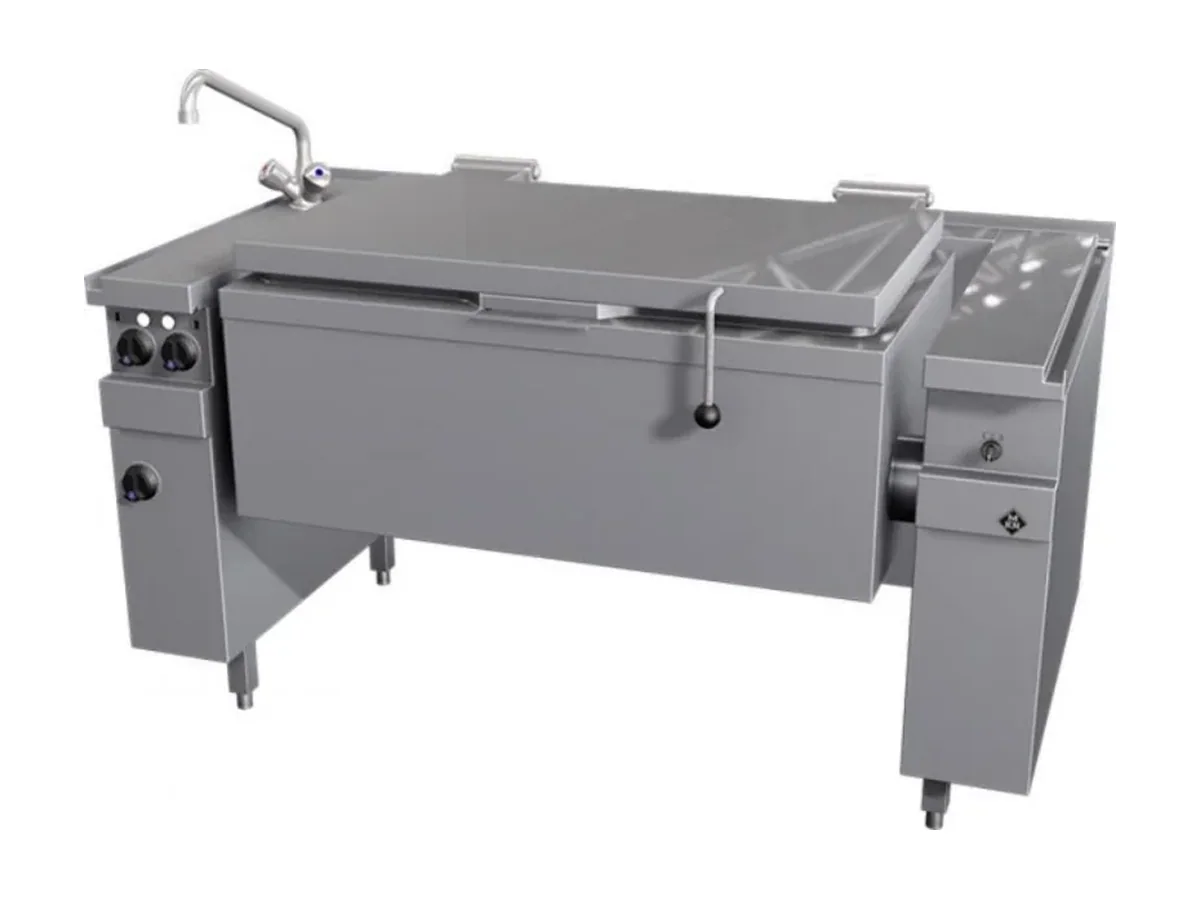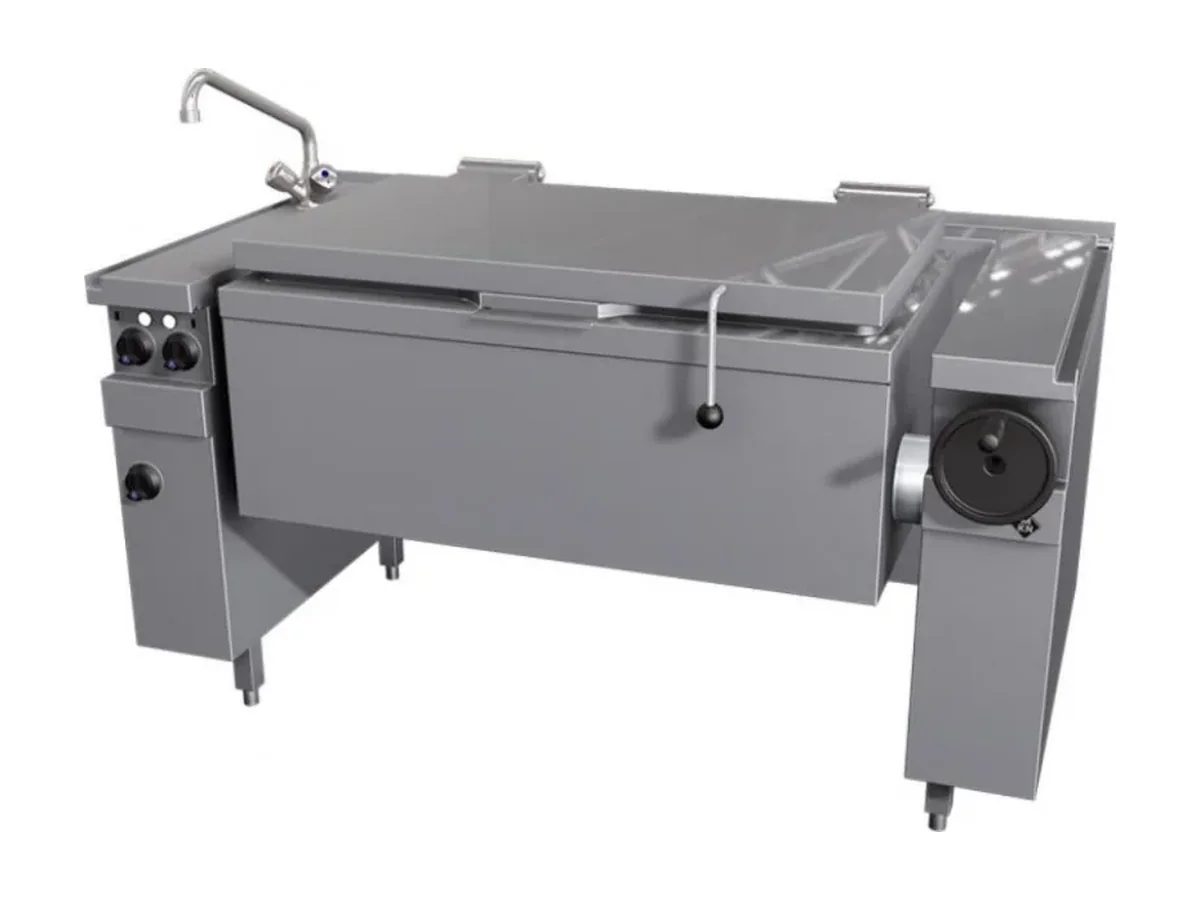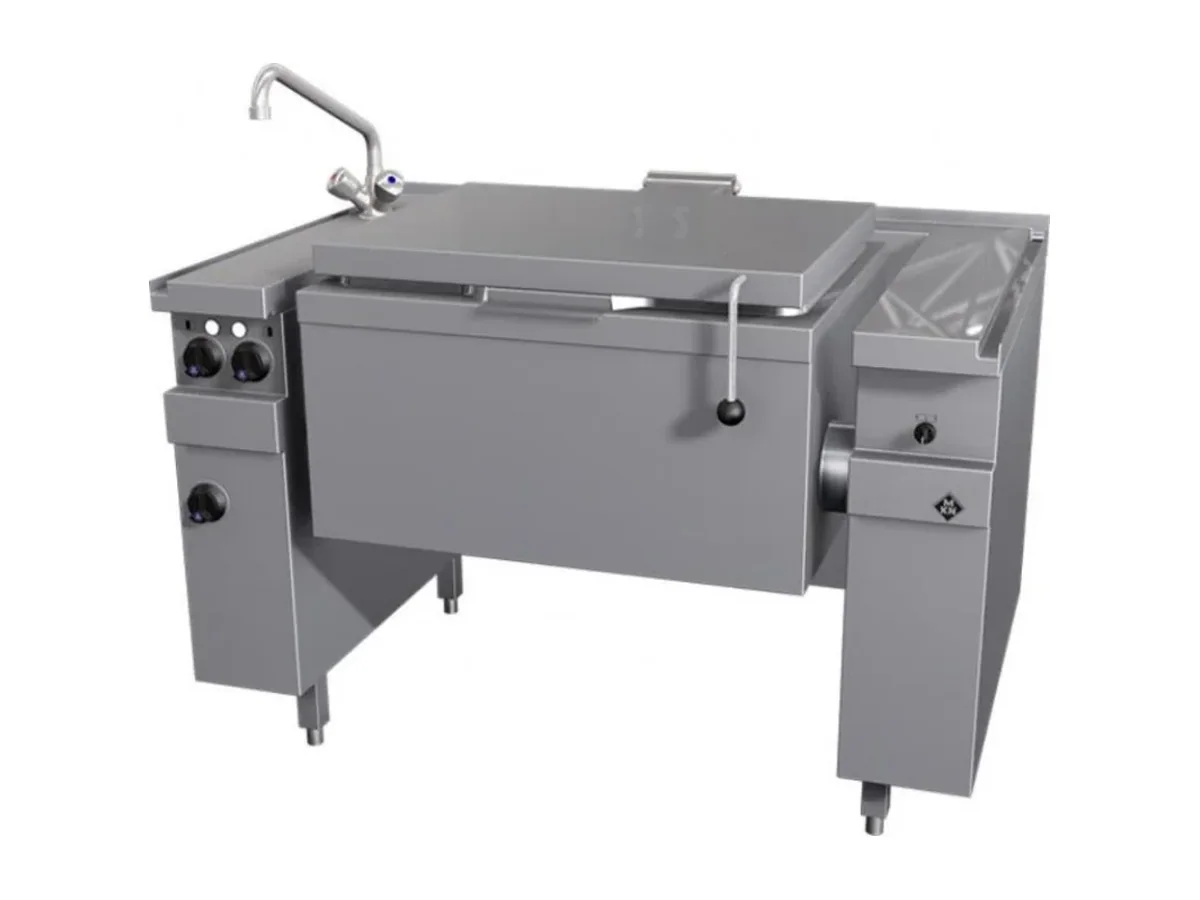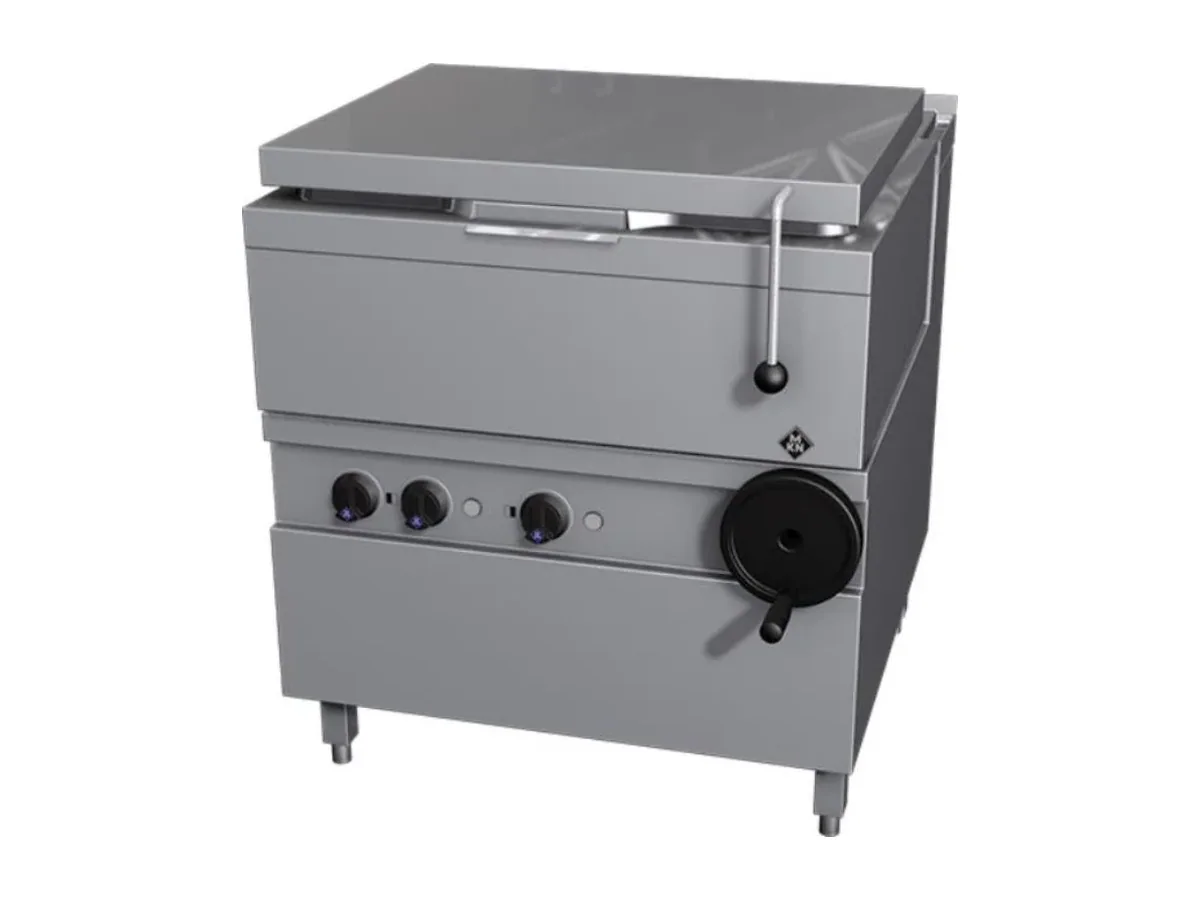
MKN Magnum Multifunctional Bratt Pan 10019139 – Tilting, Optima 850
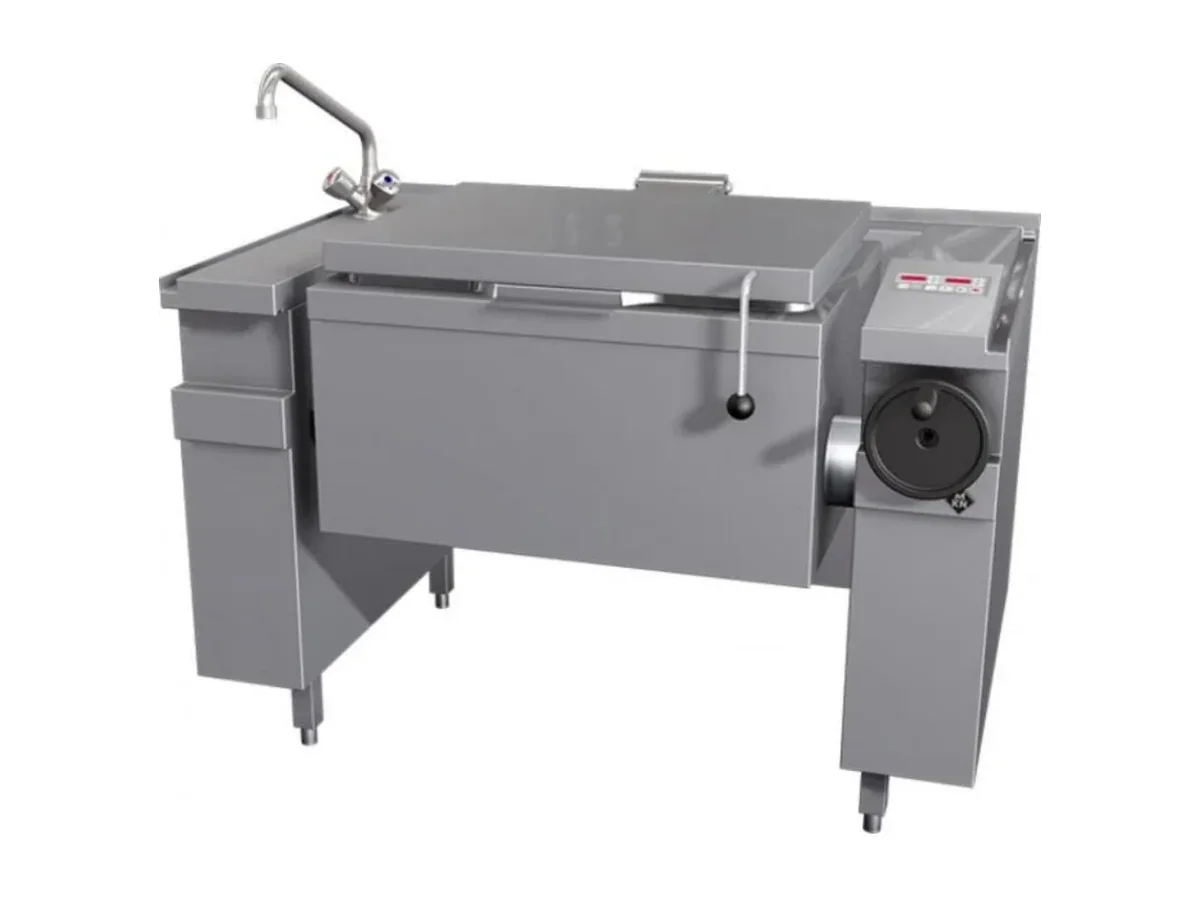
Electric Magnum bratt pan, 65 l capacity on a 700 x 540 mm surface, 14.4 kW, 1300 x 850 Optima 850 body. Article 10019139.
14.4 kW · 65 litres
Tilting and multifunctional bratt pans for searing, braising and volume cooking, including the MKN FlexiChef and FlexiChef Team multifunctional appliances.
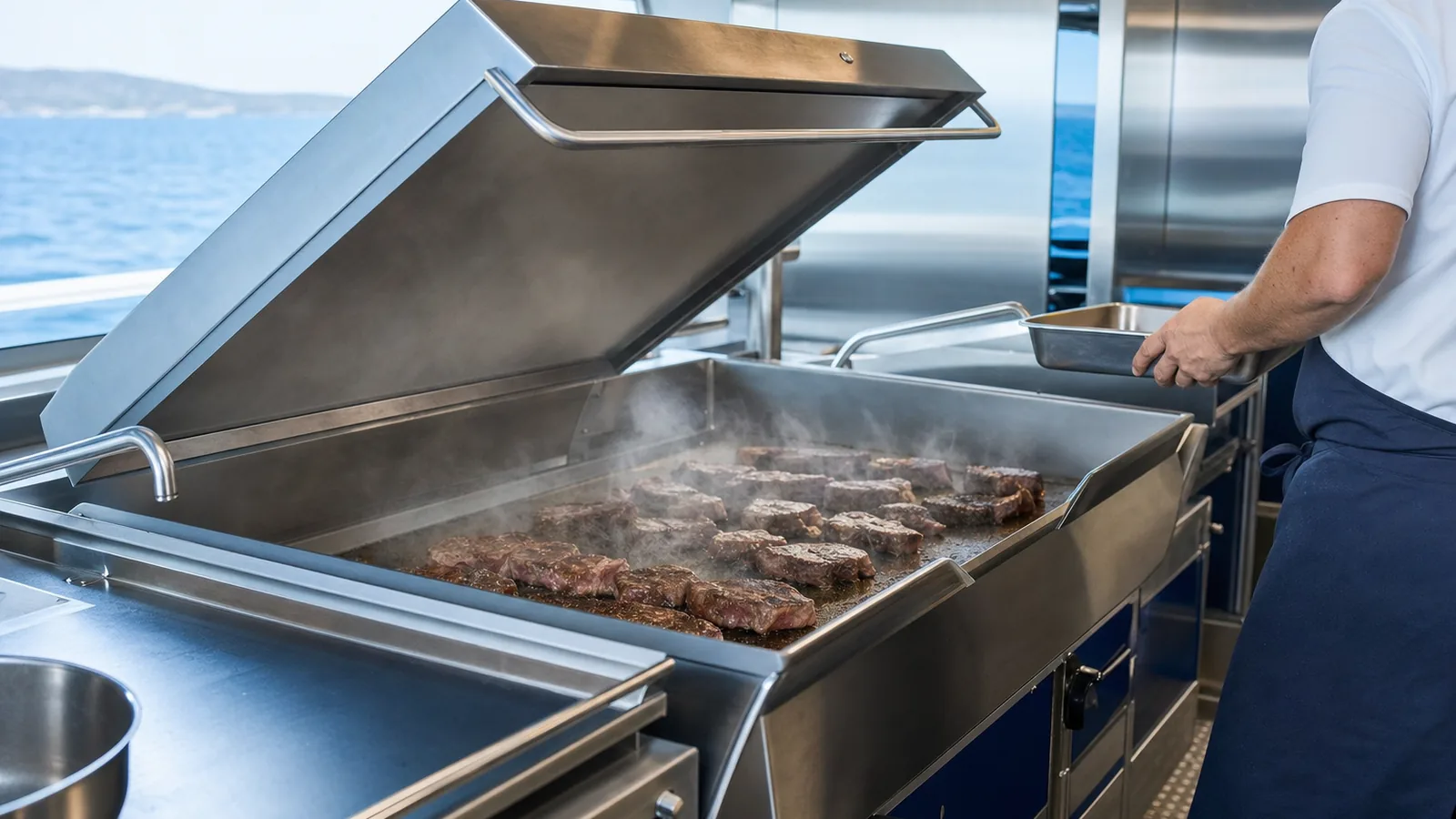
Electric Magnum bratt pan, 65 l capacity on a 700 x 540 mm surface, 14.4 kW, 1300 x 850 Optima 850 body. Article 10019139.
Electric tilting bratt pan, 94 l pan on a 1600 x 850 mm Optima 850 body, 14.6 kW at 400 V. Article 10019144.
Optima 850 electric tilting bratt pan 10019142 with 94 litre pan, 1600 x 850 x 700 mm body and 14.4 kW load at 400 V in 1.4301 stainless.
Electric tilting bratt pan, 65 litres, 700 x 540 mm pan area, 11 kW, 400 V in the MKN Optima 850 line. Article 10019140.
Electric tilting bratt pan, 62 l pan on 700 x 540 mm surface, 800 x 850 x 700 mm body, 10.8 kW, Optima 850 series.
Two 150 litre pans on one chassis at 3200 mm length on the largest FlexiChef Team, down to single 50 litre pans in the same family, define the upper and lower ends of capacity in this category. FlexiChef models run from 14.7 to 34 kW, so a single appliance can be the main production unit in a compact galley or part of a bank in a large ship’s kitchen. Net weights in this series reach 770 kg, which is a structural item on the deck and a point for the naval architect as much as the chef.
Within FlexiChef, every listed unit runs at 400 V and carries AISI 316L wetted parts, fully welded seams, a hinged lid and a drain valve, so the differentiation is really over pan size and whether the project needs Team layouts. Two-zone Team models allow separate cooking regimes side-by-side at a fixed footprint, which suits service where mixed batches must leave the galley together. Single-pan FlexiChef units suit smaller crews or galleys where other cooking equipment (for example Induction Cookers and Boiling Kettles) carry part of the load.
Optima 850 bratt pans sit at 850 mm depth across the series, matching the common galley bench line and the wider Optima 850 cooking suite. Electrical power in this series lies between 10.8 and 19.4 kW, so an Optima 850 Magnum pan can sear and braise without demanding the same electrical reservation as a full FlexiChef. Capacities from 62 to 143 litres and widths from 800 to 1600 mm give designers a choice between single wide pans and narrower modules slotted into a run.
Optima 700 bratt pans reduce body depth to 700 mm and keep power in a similar 10.8 to 19.2 kW band. These units weigh from 144 to 195 kg and reach widths up to 1300 mm, which helps where passages, lifts or galley footprints limit module size. Both Optima ranges offer models with AISI 316L wetted parts, fully welded seams, hinged lids, drain valves on selected codes and “energy management ready” connectivity on a subset, so a specifier can standardise on one depth and then decide how much pan area and integration the line needs.
Across the whole category, pan capacity runs from 15 to 170 litres, with most models sitting between 60 and 150 litres. Widths start at 800 mm and go up to 3200 mm, while net weights range from 144 to 770 kg. That spread lets a yard pick a compact 92 litre tilting unit for a small offshore or yacht galley, or step up to long two-zone and Team appliances where the cook-chill chain or buffet service justifies it.
Electrical power on the listed products lies between 10.5 and 34 kW on published data, which feeds directly into generator sizing and load-shedding logic. One representative 92 litre tilting multifunctional bratt pan draws 10.5 kW and emits 4200 W of latent and 6000 W of sensible heat, figures that give HVAC design teams a starting point for pans of similar size. Most units are 850 mm deep, with a smaller group at 700 mm, so they can sit back-to-back with other cooking suites or against a bulkhead while holding a standard working corridor.
Almost all products in this category specify 400 V supplies, with a small number listing 380–415 V and one at 440 V, so marine versions fit readily into the common 400–440 V shipboard low-voltage bands. Only isolated products state 50 Hz or 60 Hz explicitly, which makes it important to order the correct variant for the vessel’s main distribution rather than assuming dual-frequency operation. Electric-only models dominate here, and multi-kilowatt pan heaters alongside other electric cooking equipment can be a major share of the galley’s coincident demand.
Energy management readiness, where present on Optima 700 and Optima 850 units, gives the electrical engineer a hook for shed strategies so that a bank of pans, ovens and Induction Cookers do not all spike at once. Network-connectable models with HACCP logging and core temperature probes in the wider category support central supervision, but those attributes are concentrated in a small subset, so critical control points should be matched explicitly to the few models that offer them.
Bratt pans and multifunctional pans are built for searing, shallow frying, braising and general batch cooking in an open pan. Where the primary duty is large volumes of soups, sauces or boiling-only production, the Boiling Kettles category is usually the more appropriate starting point, because a kettle is built around boiling at volume rather than around an open pan surface. Likewise, for high-capacity deep frying, the Deep Fat Fryers category is the better place to look than pushing a multifunctional pan into full-time fryer duty.
Where the brief calls for static grilling or high-temperature marking more than for wet-cooking, Grills & Griddles may serve better, while Ovens cover roasting, baking and closed-chamber steaming that a bratt pan cannot match. For neutral storage or landing space around the pan battery, the Neutral Units & Bases category completes the galley line without adding unnecessary connected load.
Published bratt pans in this category draw between 10.5 and 34 kW per unit, with FlexiChef models at the top end of that band. A bank of two FlexiChef Team units can therefore approach the same connected load as several smaller Optima 700 or Optima 850 pans combined.
FlexiChef Team models combine two pans on one chassis, with the largest listed unit giving 150 + 150 litres across two zones at 3200 mm length. Electrical power on FlexiChef runs up to 34 kW per appliance, so a Team can support very high batch output where the galley has the electrical headroom.
Optima 700 models share similar 10.8 to around 19.2 kW power levels with Optima 850 but at 700 mm depth and widths up to 1300 mm. That smaller footprint and net weights from 144 to 195 kg can simplify routing through tight access and layout in constrained galleys.
One representative 92 litre tilting multifunctional bratt pan in this range emits 4200 W of latent and 6000 W of sensible heat at 10.5 kW electrical input. Designers often use these figures as a guide when selecting and locating extraction and cooling for similar-capacity pans.
The constraints that actually decide a galley specification — service, power, space, water, heat, motion, materials and compliance — worked through in the order they bite.
Read guideA walk through a working galley, station by station, and the equipment found at each: stores, preparation, the hot line, holding, warewashing and the laundry beside it.
Read guideWhat actually changes when a commercial appliance is built for a ship — supply, fixing, water protection, materials, hygiene construction, refrigerant and certification — and why shore equipment fails at sea.
Read guide