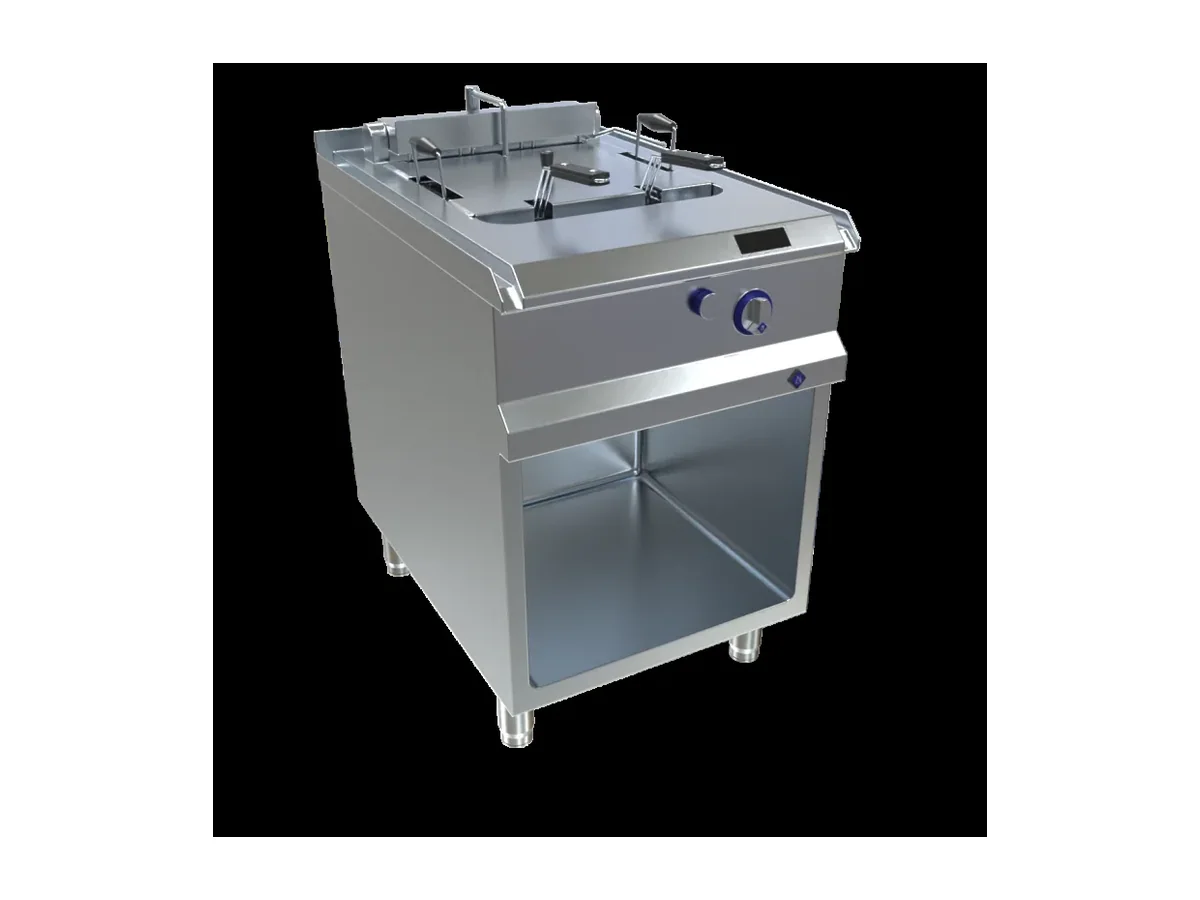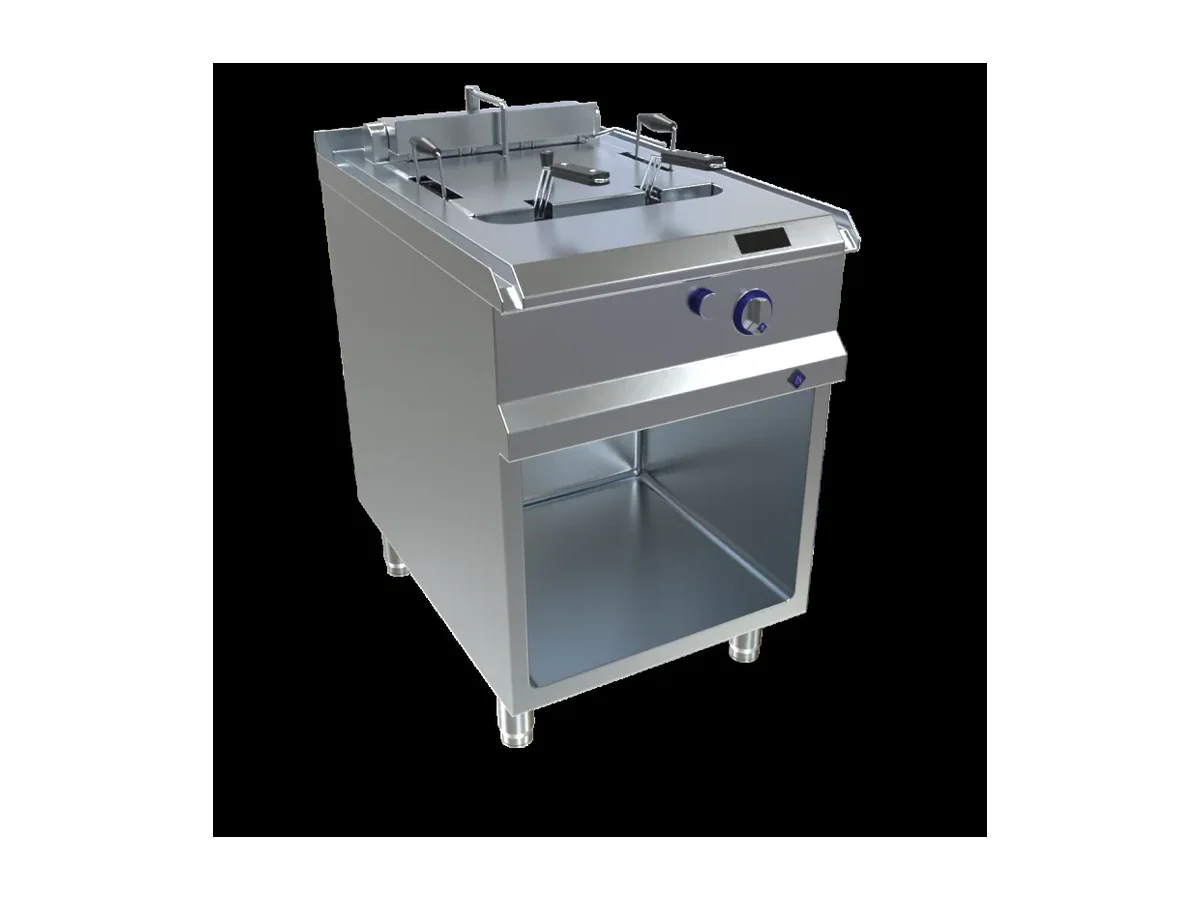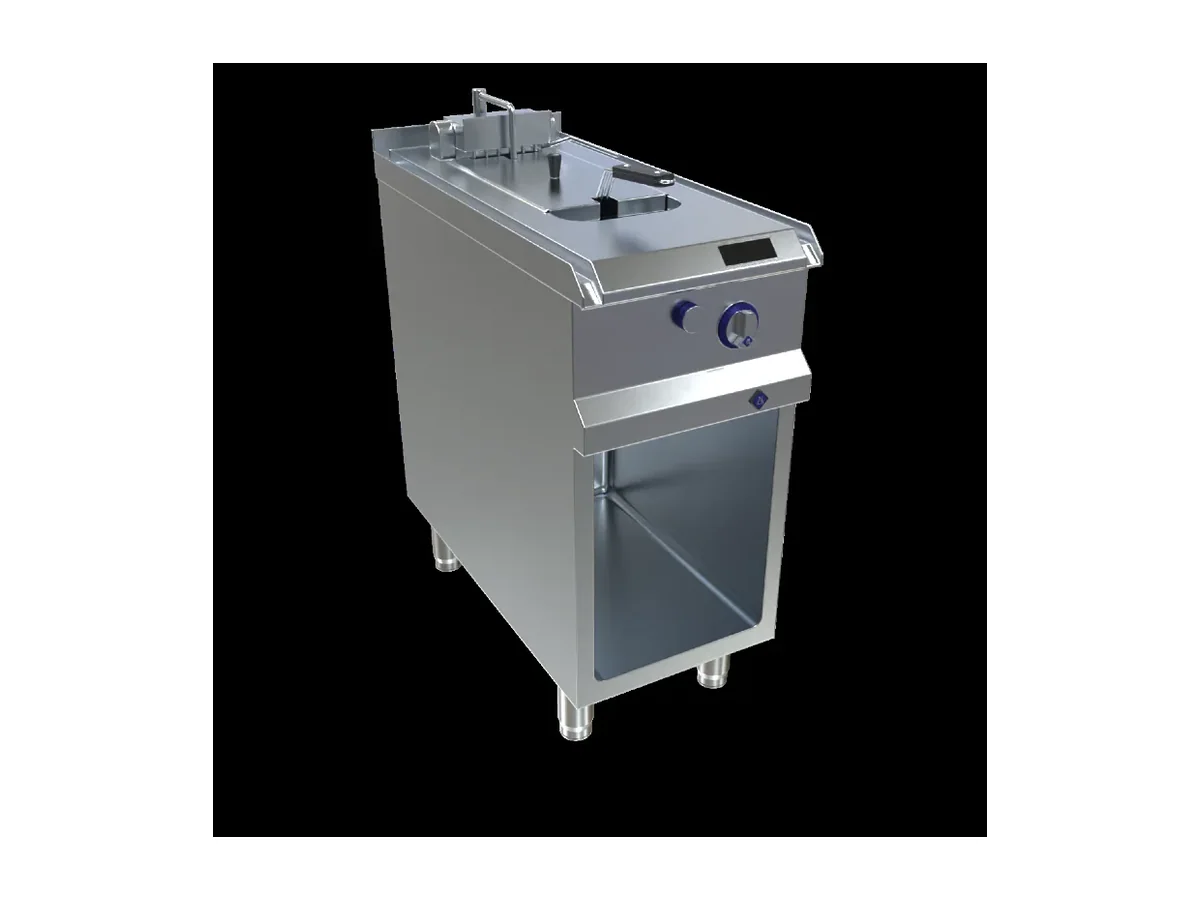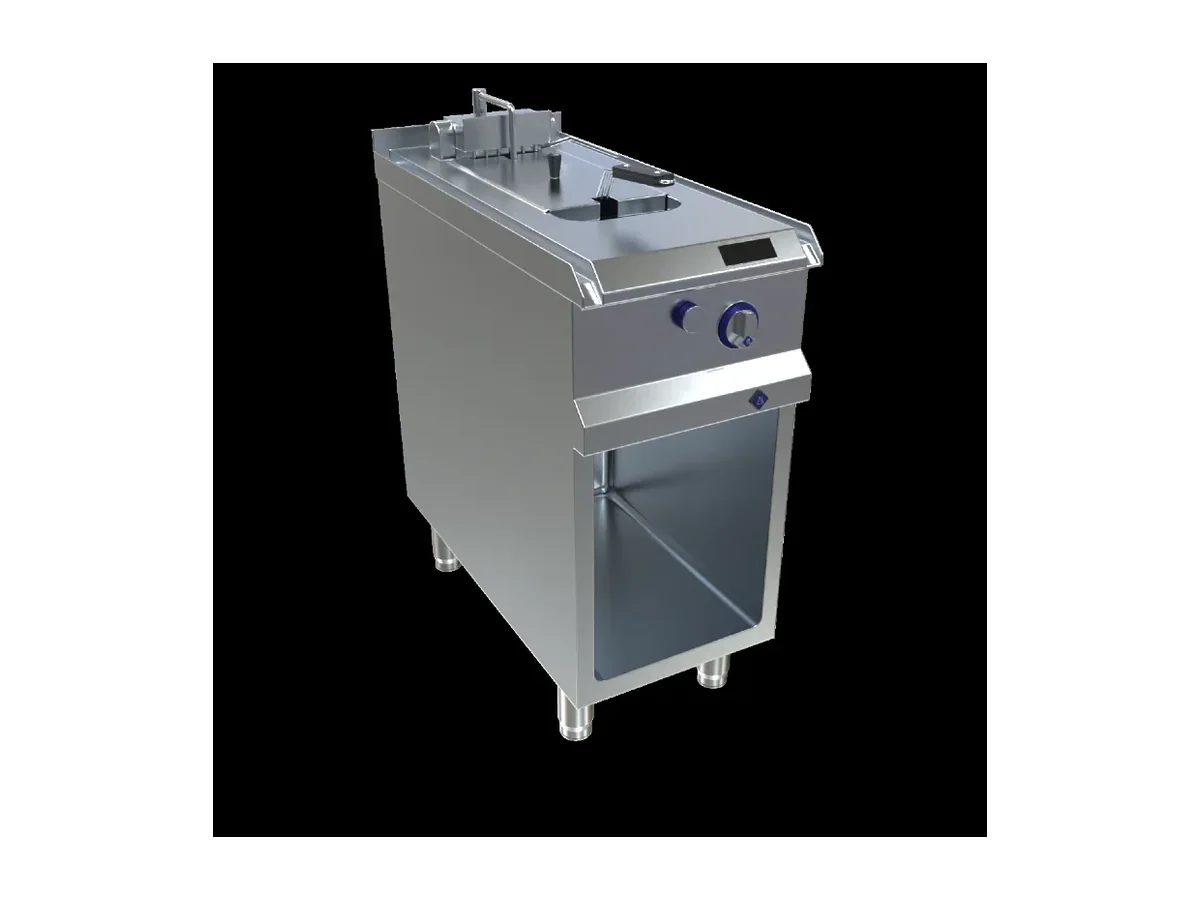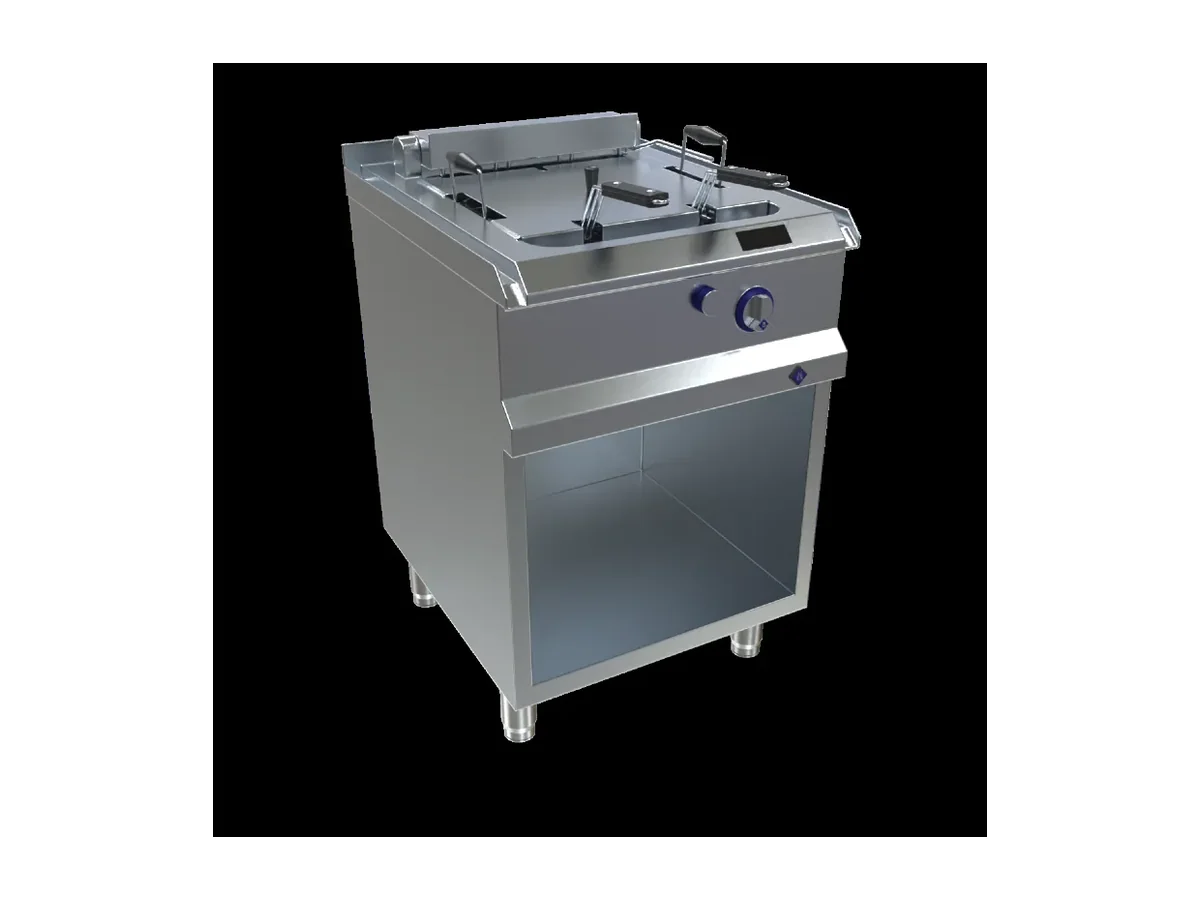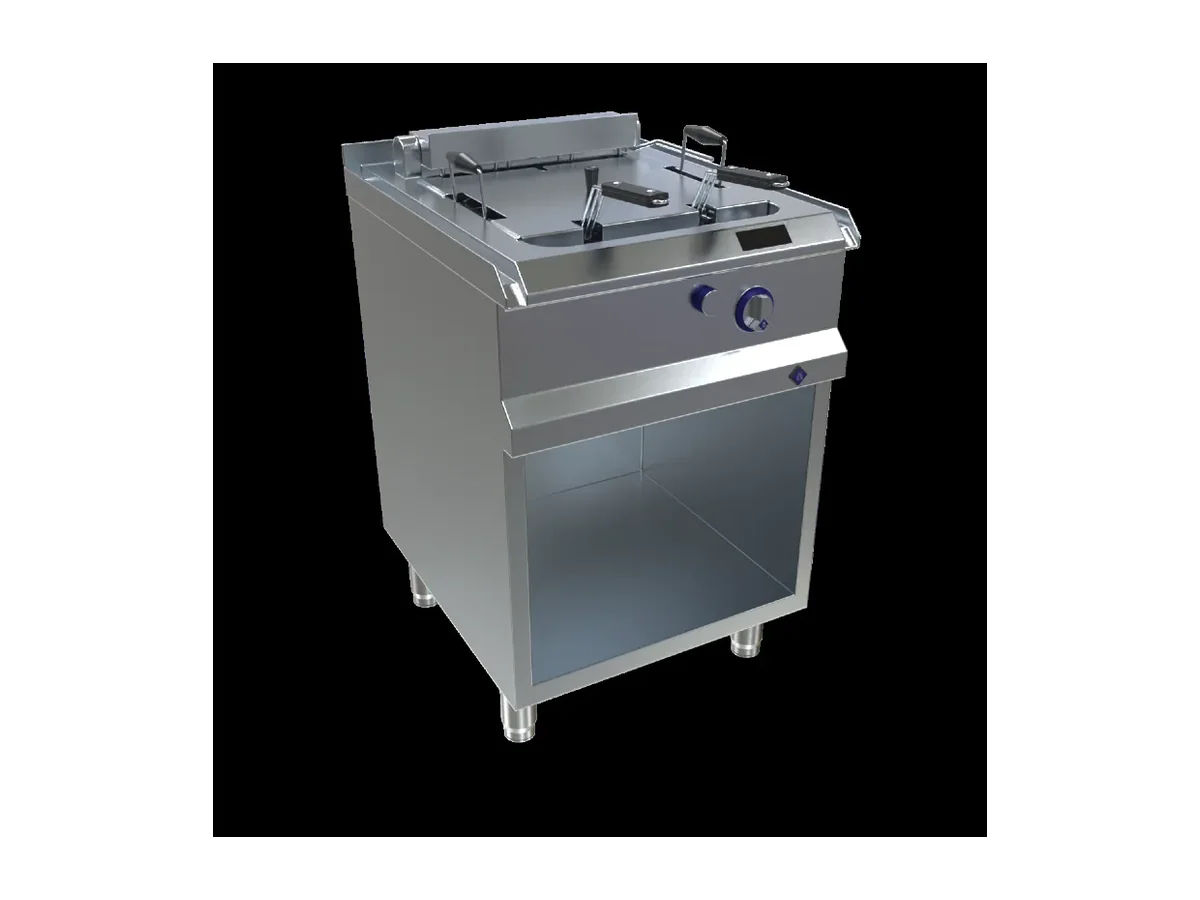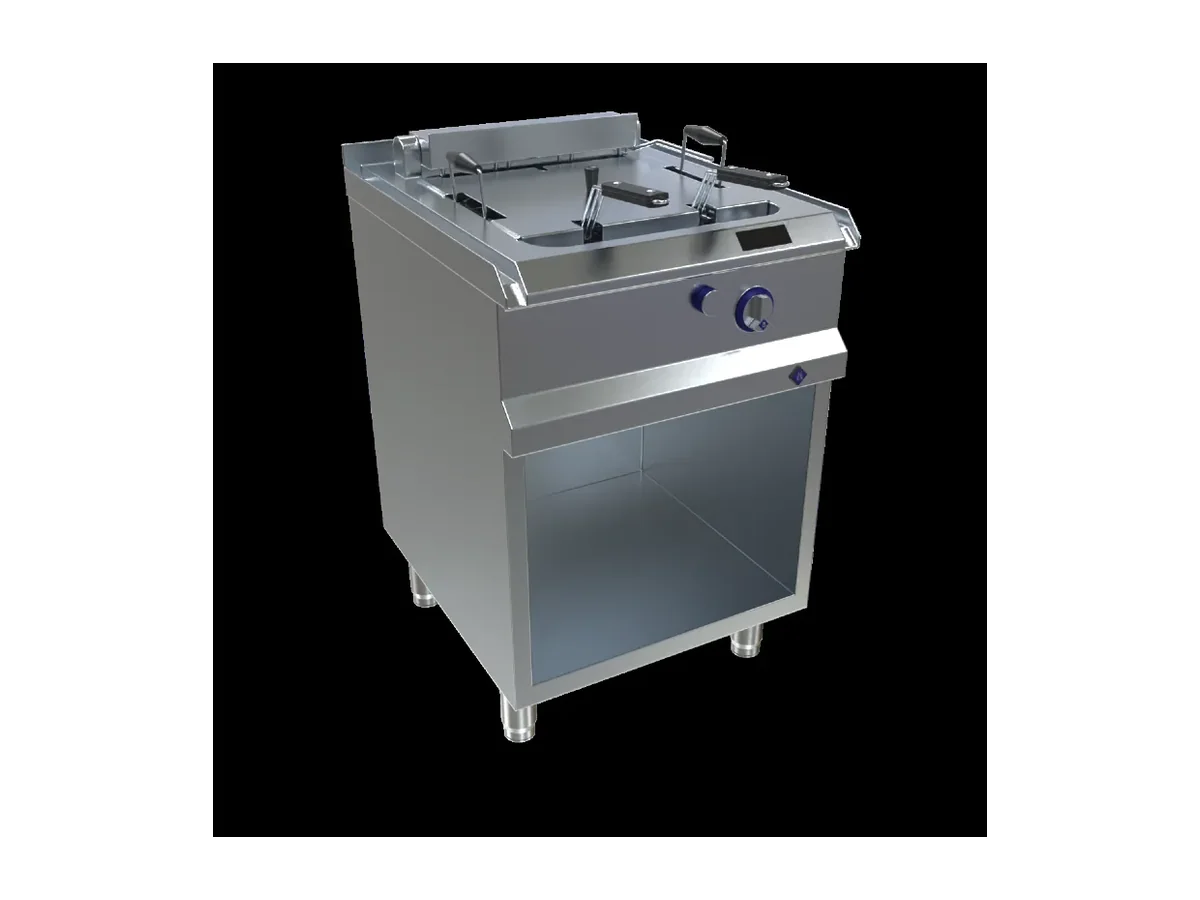

23 lt single-well marine deep fat fryer, 18 kW at 440 V/3 ph/50/60 Hz, 500×900 mm footprint, thermaline 90 series, PNC 589826.
18 kW · 20 lt MIN; 23 lt MAX
Marine equipment by electrical supply
Three-Phase Marine Fryers on this page are the 32 deep fat fryers whose published data states a three-phase connection: 20 from MKN and 12 from Electrolux Professional. They span 5.4 kW to 36 kW, hold from 12.5 litres up to wells in the 50 litre band, and come in 380 V, 400 V and 440 V builds, with 12 listed for 60 Hz and 18 for 50 Hz.
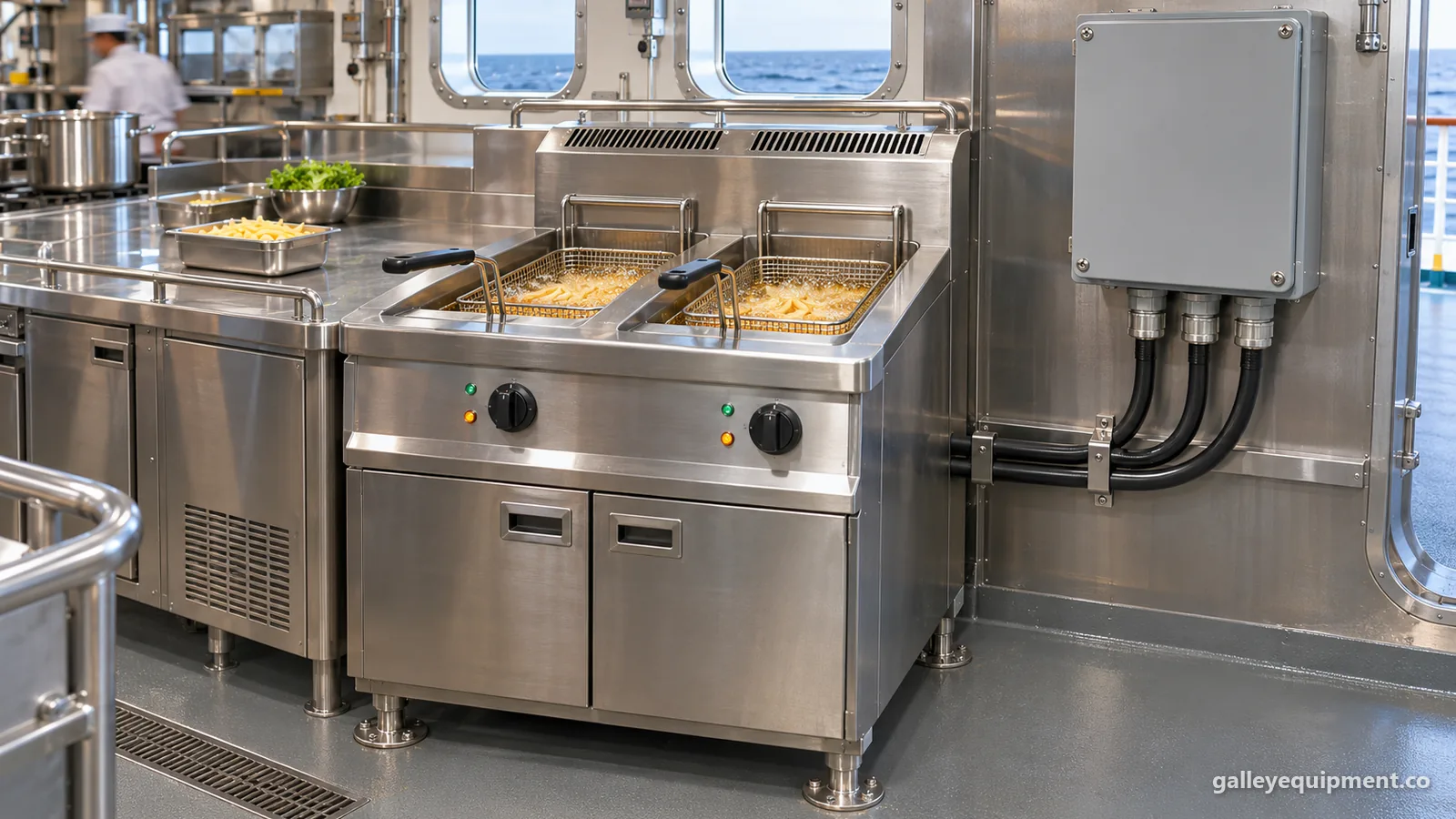
23 lt single-well marine deep fat fryer, 18 kW at 440 V/3 ph/50/60 Hz, 500×900 mm footprint, thermaline 90 series, PNC 589826.
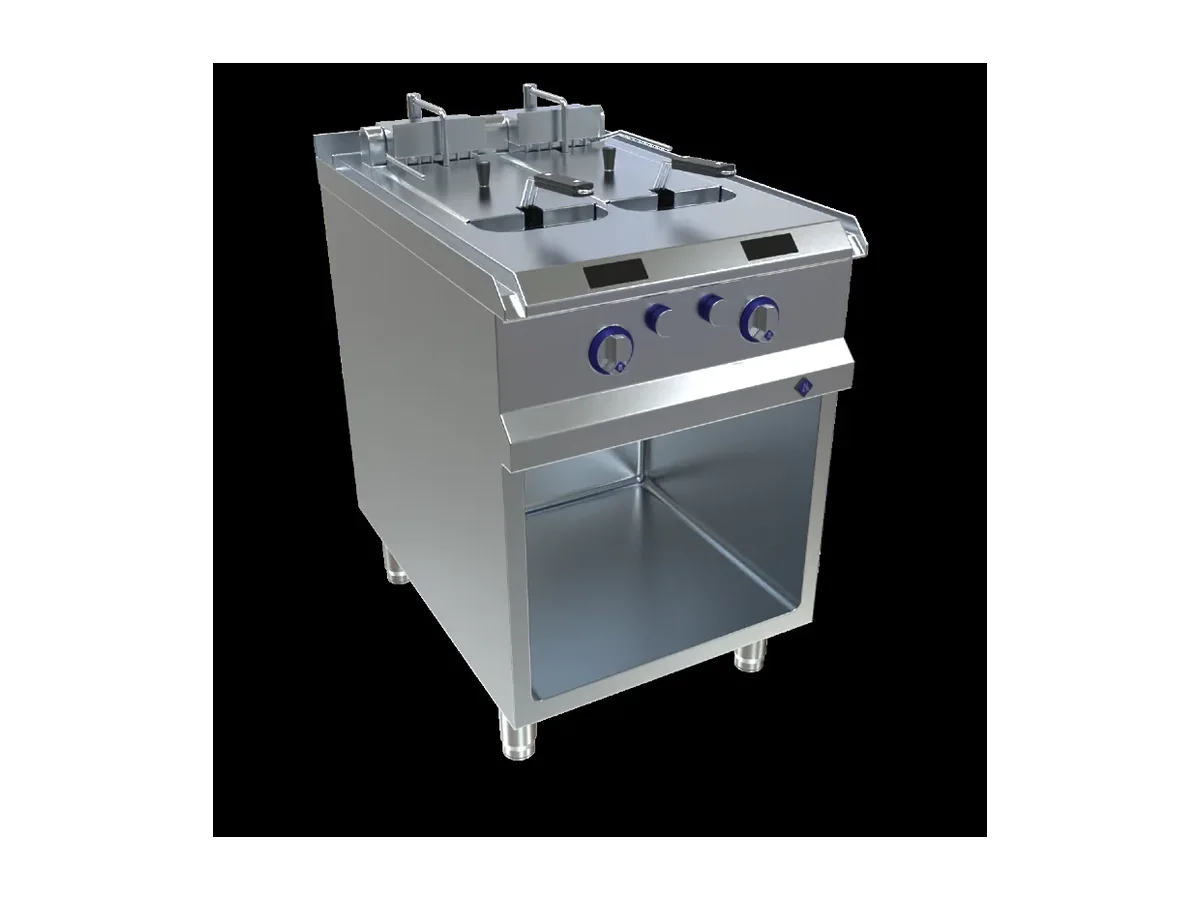
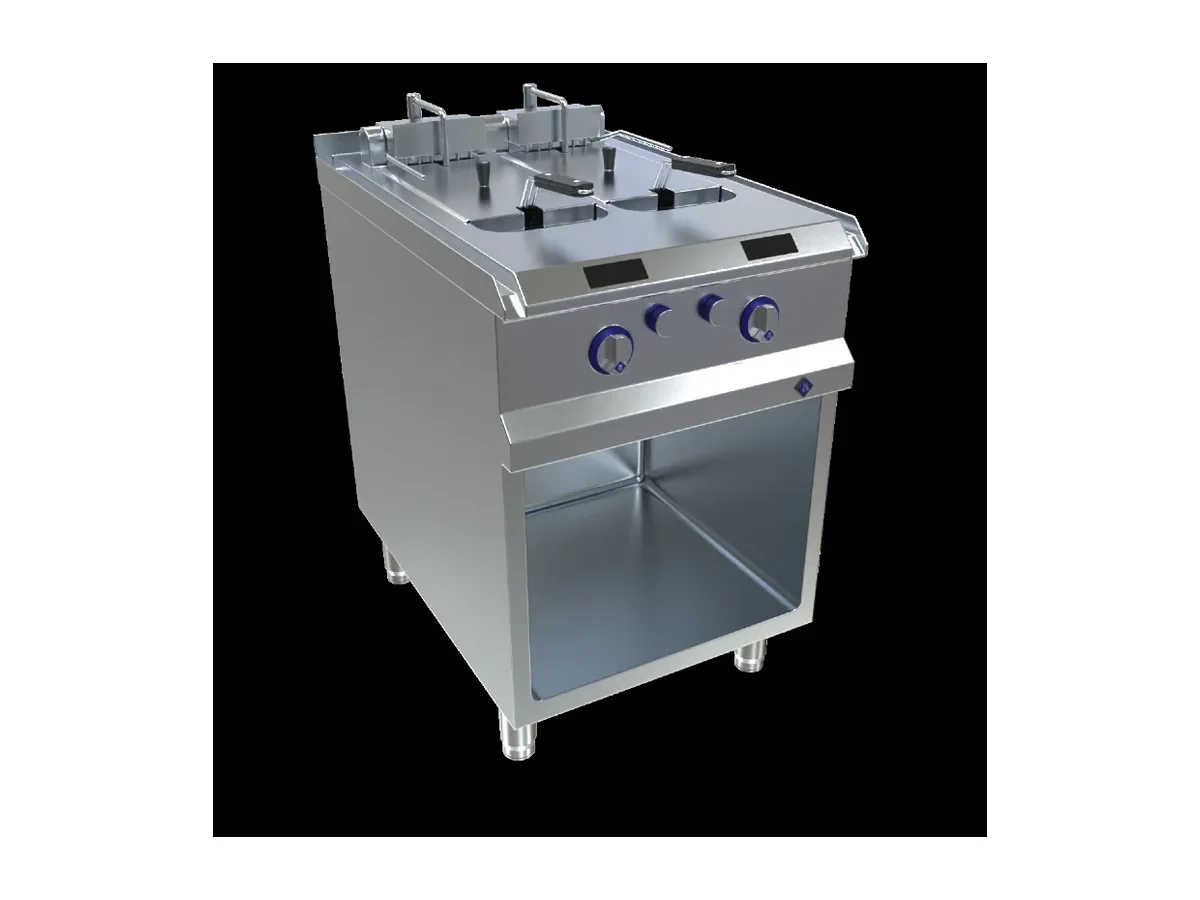
Two-well 900XP electric fryer, 2×14 lt wells at 17.4 kW with 105–185 °C control and IPX4 rating for shipboard galleys.
Electrolux Professional Deep Fat Fryer 391383 – 900XP, Two Wells Electric Fryer 23 liter
Two-well 900XP marine electric fryer, 36 kW, 21–23 lt per well and 75 kg/hr output at 105–185 °C. PNC 391383.
Electrolux Professional Deep Fat Fryer 391382 – 900XP, Two Wells Electric Fryer 23 liter
900XP twin-well electric fryer, 21–23 lt per well and 75 kg/hr output on a 36 kW, 400 V/3 ph/50–60 Hz supply. PNC 391382.
Electrolux Professional Deep Fat Fryer 391381 – 900XP, One Well Electric Fryer 23 liter
900XP electric deep fat fryer with 21–23 lt one-piece well and 18 kW load, 105–185 °C control. PNC 391381, IPX5, marine 440 V/3 ph/50-60 Hz.
Electrolux Professional Deep Fat Fryer 391380 – 900XP, One Well Electric Fryer 23 liter
900XP electric deep fat fryer with a 23 lt single well and 18 kW load, 105–185 °C thermostat range. PNC 391380.
18–20 lt electric fryer well at 16.5 kW with 105–185 °C control in the 900XP line, single tank configured for two half baskets.
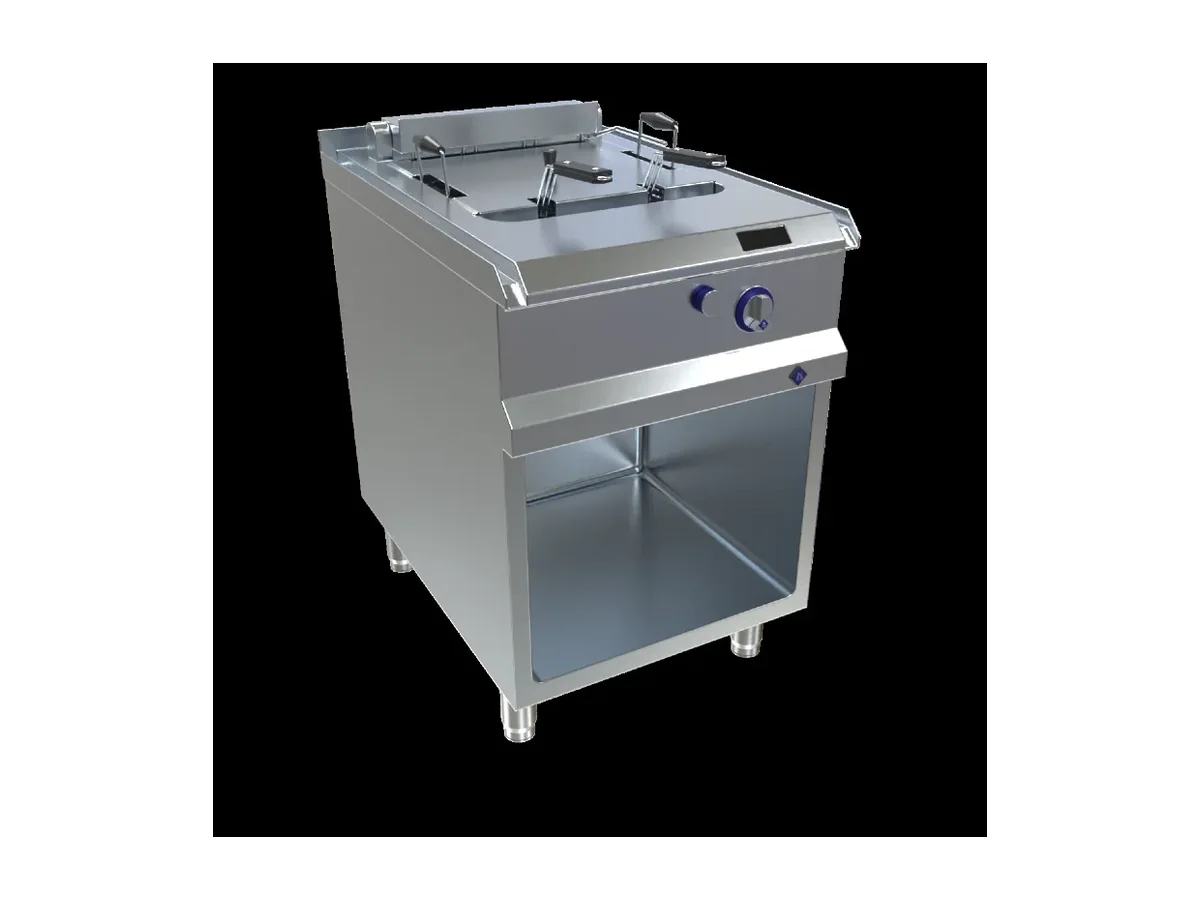
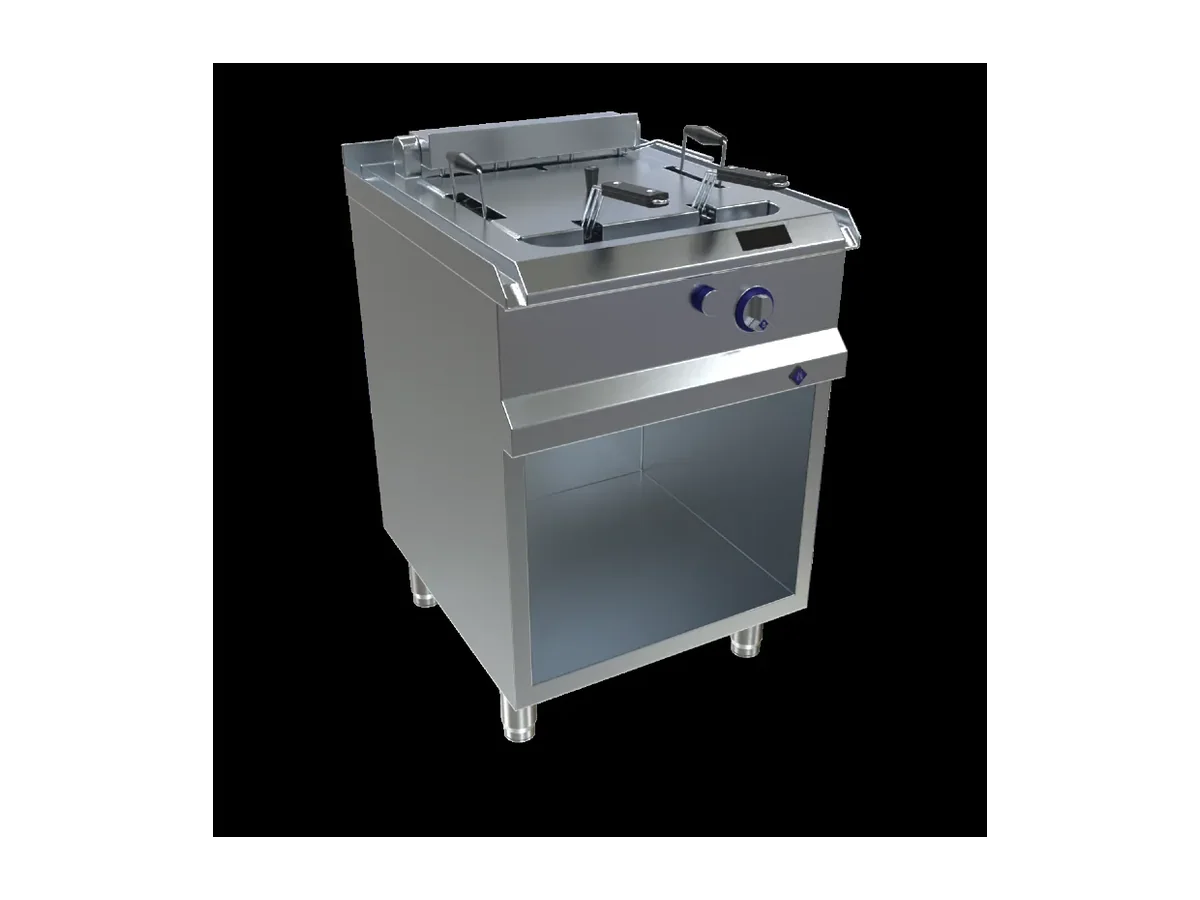
Single-well thermaline 90 marine fryer, 23 lt max oil, 18 kW at 440 V/3 ph/60 Hz with 500 x 900 mm footprint. PNC 589913.
Electrolux Professional Deep Fat Fryer 371162 – 900XP, 700XP 1 Well Freestanding El. Fryer 14 liter
Single-well 14 lt electric fryer, 8.7 kW on 380-400 V/3 ph/50/60 Hz, 400 x 730 mm 900XP freestanding module, PNC 371162.
Single-well 14 lt electric deep fat fryer, 10 kW at 440 V/3 ph/60 Hz, 400 x 900 mm thermaline 90 freestanding module, H=700.
Single 14 lt electric fryer, 400 x 900 mm thermaline 90 module, 10 kW at 440 V/3 ph/50/60 Hz, H=700 on base.
7 lt single-well electric deep fat fryer, 5.4 kW at 440 V/3 ph/50/60 Hz, 400 x 900 mm thermaline 90 freestanding unit, H=700.
MKN Deep Fat Fryer 8EFRI030DMLFS – Electric
Electric deep fat fryer, 30 litre tank at 20 kW with IPX6 washdown protection in 1.4301/AISI 304 chrome‑nickel steel. MKN 8EFRI030DMLFS.
MKN Deep Fat Fryer 8EFRI030DFLFS – Electric
Electric deep fat fryer, 30-litre single tank with 10 kW FlexPower heating, IPX6 water protection, chrome-nickel steel 1.4301 / AISI 304.
MKN Deep Fat Fryer 8EFRI025DMLFS – Electric
Electric twin-pan deep fat fryer, 2×12.5 l capacity at 20 kW, IPX6 wash-down protection in chrome-nickel steel 1.4301 / AISI 304.
MKN Deep Fat Fryer 8EFRI025DFLFS – Electric
Electric twin-tank fryer 2×12.5 litres, 12 kW FlexPower, IPX6, chrome‑nickel steel 1.4301 / AISI 304. MKN 8EFRI025DFLFS.
MKN Deep Fat Fryer 8EFRI012DMLFS – Electric
Single-tank electric deep fat fryer, 12.5 l capacity, 10 kW, IPX6, in chrome-nickel steel 1.4301 / AISI 304.
MKN Deep Fat Fryer 8EFRI012DFLFS – Electric
Electric deep fat fryer 6 kW FlexPower, IPX6 water protection, MKN 8EFRI012DFLFS for 380–415 V, 3 N-PE AC/50 Hz marine installations.
MKN Deep Fat Fryer 8EFRI030DMFS – Electric
Single-zone 30-litre electric deep fat fryer, 20 kW MaxPower with IPX6 protection, MKN 8EFRI030DMFS.
MKN Deep Fat Fryer 8EFRI030DFFS – Electric
Single‑tank 30 litre electric deep fat fryer with 10 kW FlexPower and IPX6 water protection, MKN 8EFRI030DFFS.
MKN Deep Fat Fryer 7EFRI030DML – Electric
Single-well Optima 700 electric deep fat fryer, 30 litre oil capacity, 20 kW at 380–415 V, IPX6 water protection. MKN 7EFRI030DML.
MKN Deep Fat Fryer 7EFRI030DM – Electric
Optima 700 electric deep fat fryer 7EFRI030DM with single 30 litre well, 20 kW load and IPX6 protection for spray-wash galleys.
MKN Deep Fat Fryer 7EFRI030DFL – Electric
Single-tank Optima 700 deep fat fryer, 30 litres oil capacity, 10 kW at 380–415 V with IPX6 protection. Article 7EFRI030DFL.
MKN Deep Fat Fryer 7EFRI030DF – Electric
Single-zone Optima 700 electric fryer, 30 litre tank, 10 kW at 380–415 V with IPX6 washdown rating, article 7EFRI030DF.
The filter behind these Three-Phase Marine Fryers is a data filter, not a design category. It keeps the 32 models whose data sheets state a three-phase connection, 20 made by MKN and 12 by Electrolux Professional. Many more fryers in the marine deep fat fryers category are three-phase in practice, since almost every commercial fryer above a few kilowatts is, but their records do not yet carry the phase field and so they do not appear here. For an electrical engineer checking a board schedule, this is the shortlist where the connection is already confirmed on paper.
All 32 are electric. Every one is filed for ships, yachts and commercial vessels, and 12 are also filed for offshore units.
Because the current would be unmanageable on one phase. A fryer turns electrical power straight into heat, and the published ratings on this page run from 5.4 kW to 36 kW. Spread over three phases at 440 V, a 20 kW fryer draws about 26 A per phase; at 380 V the same unit draws about 30 A. Put that 20 kW on a single 230 V phase and it would need roughly 87 A, a cable as thick as a thumb and a breaker few galley boards carry. A 3 phase fryer also keeps the load balanced, which matters on a ship's generator: a heavy single-phase load unbalances the machine and heats its windings unevenly.
Phase also shapes the protection. A three-phase fryer is fed through a three-pole breaker, so a fault on any one phase disconnects the whole unit instead of leaving part of it live while the cook reaches in to clean.
MKN supplies the larger share, and Optima 700 is its main series here.
| Brand | Series | Models |
|---|---|---|
| MKN | Optima 700 | 11 |
| MKN | other or unlisted MKN series | 9 |
| Electrolux Professional | 900XP | 7 |
| Electrolux Professional | thermaline 90 | 5 |
The MKN share also includes the 8EFRI030DFFS and 8EFRI030DMFS, both with 30 litre wells and rated for 380-415 V at 50 Hz, the latter at 20 kW. Capacity spreads across two bands: 13 models hold up to 30 litres and 12 sit in the band up to 50 litres. Where capacity is published, on 19 models, it runs from 12.5 to 30 litres.
A large block of the MKN fryers here are 7EFRI models with a D in the code, and they come in matched sets. The 7EFRI012DF and 7EFRI012DM share a 12.5 litre well at 6 kW and 10 kW. The twin-well 7EFRI025DF and 7EFRI025DM carry two 12.5 litre wells at 12 kW and 20 kW, and the 7EFRI030DF and 7EFRI030DM put 30 litres in one well at 10 kW and 20 kW. Each of these also appears in an L version, such as the 7EFRI012DFL or 7EFRI025DML, with the same rating and capacity.
That pairing gives the electrical designer a real choice. A 6 kW unit at 400 V draws under 9 A per phase, small enough to share a feeder with other modules; a 20 kW unit needs its own circuit. Across the filter, ratings cluster low: ten models are rated 5 to 10 kW, twelve fall from 10 to 20 kW, and a pair exceed 20 kW without passing 40 kW.
Three voltage builds appear: 7 models at 440 V, 3 at 380 V and 2 at 400 V. Supply ratings break down as follows: the 380-415 V bracket appears 13 times with 50 Hz and 5 times with 60 Hz, while the 440-480 V bracket appears 7 times with 60 Hz and 5 times with 50 Hz. A three-phase fryer still has to match the line voltage of the board. On a ship running 440 V the 380-415 V builds would overheat, and on a 400 V yacht a 440 V build would lag. Vessels on 440 V and 60 Hz can narrow the list further with the fryers rated 440-480 V at 60 Hz, and the 50 versus 60 Hz reference for shipboard galleys sets out why frequency barely touches a fryer but changes motors and compressors elsewhere.
On a galley board, three-phase fryers sit next to single-phase loads such as toasters, coffee machines and control circuits. The designer spreads those single-phase loads across the three phases so that no phase carries far more than the others, and the fryers, being balanced already, form the base load. Two further items belong on the drawing. Each fryer needs a local isolator within reach, and on ships the fryer supply must be cut automatically when the galley extinguishing system discharges, under SOLAS regulation II-2/10.6.4, so the shunt trip or contactor for that cut-off is wired into the fryer feeder.
Phase is rarely the first question a buyer asks, and sorting by it hides most of the catalogue. A galley planner who starts from the vessel will see far more choice among the 110 deep fat fryers filed for ships, many of them three-phase even where the record does not say so. A small boat with only a single-phase 230 V supply will find nothing here, because no fryer in this filter is built for one phase. And if the board voltage is already fixed at 440 V and 60 Hz, the dedicated supply filter above is the shorter route.
An accurate quotation for three-phase marine fryers needs the supply described in full. Give the line voltage of the galley board, the frequency, and whether a neutral is distributed, plus the breaker size available for the fryer if the board already exists. Add the vessel type, the space in the cooking line and the number of fryers. With those details on the three-phase fryer enquiry, we can check each candidate against the board before suggesting it.
Last reviewed by the Vista Marine galley engineering team.
Questions about three-phase marine fryers
How much current does a three-phase marine fryer draw?
It depends on rating and voltage. A 20 kW fryer draws about 26 A per phase at 440 V and about 30 A at 380 V, while a 6 kW model at 400 V stays under 9 A per phase. The ratings on this page run from 5.4 kW to 36 kW, so feeder sizes vary widely.
Are there 60 Hz three-phase fryers in this list?
Twelve models list 60 Hz operation: 7 rated for 440-480 V at 60 Hz and 5 for 380-415 V at 60 Hz. Eighteen list 50 Hz. A fryer element depends on voltage rather than frequency, so the line voltage on the galley board is the figure to match first.
Can a 3 phase fryer run on a single-phase supply?
Not as listed. Every model in this filter is built for a three-phase connection, and on one phase the current would be roughly three times higher per conductor. A vessel with only single-phase power needs either a three-phase supply for the galley or a much smaller appliance than any fryer listed here.
Why do so few fryers appear in the three-phase filter?
The filter keeps only models whose data sheets state the phase, 32 in total. Many other fryers in the catalogue are three-phase in practice, but their records do not yet carry the phase field. For confirmation on any model outside this list, the data sheet or a quotation request will settle it.
What is the difference between the DF and DM versions of MKN fryers?
In this list they are the lower and higher rating of the same well. The 7EFRI012DF is 6 kW and the 7EFRI012DM 10 kW, both with 12.5 litres. The 7EFRI025DF and 7EFRI025DM carry two 12.5 litre wells at 12 kW and 20 kW. The higher rating recovers oil temperature faster.
Request a quotation for three-phase marine fryers
Send the vessel type, supply voltage, frequency and phase and the quantities, and our team will come back with a specification and quotation.