Optima 850 kettles for main production lines
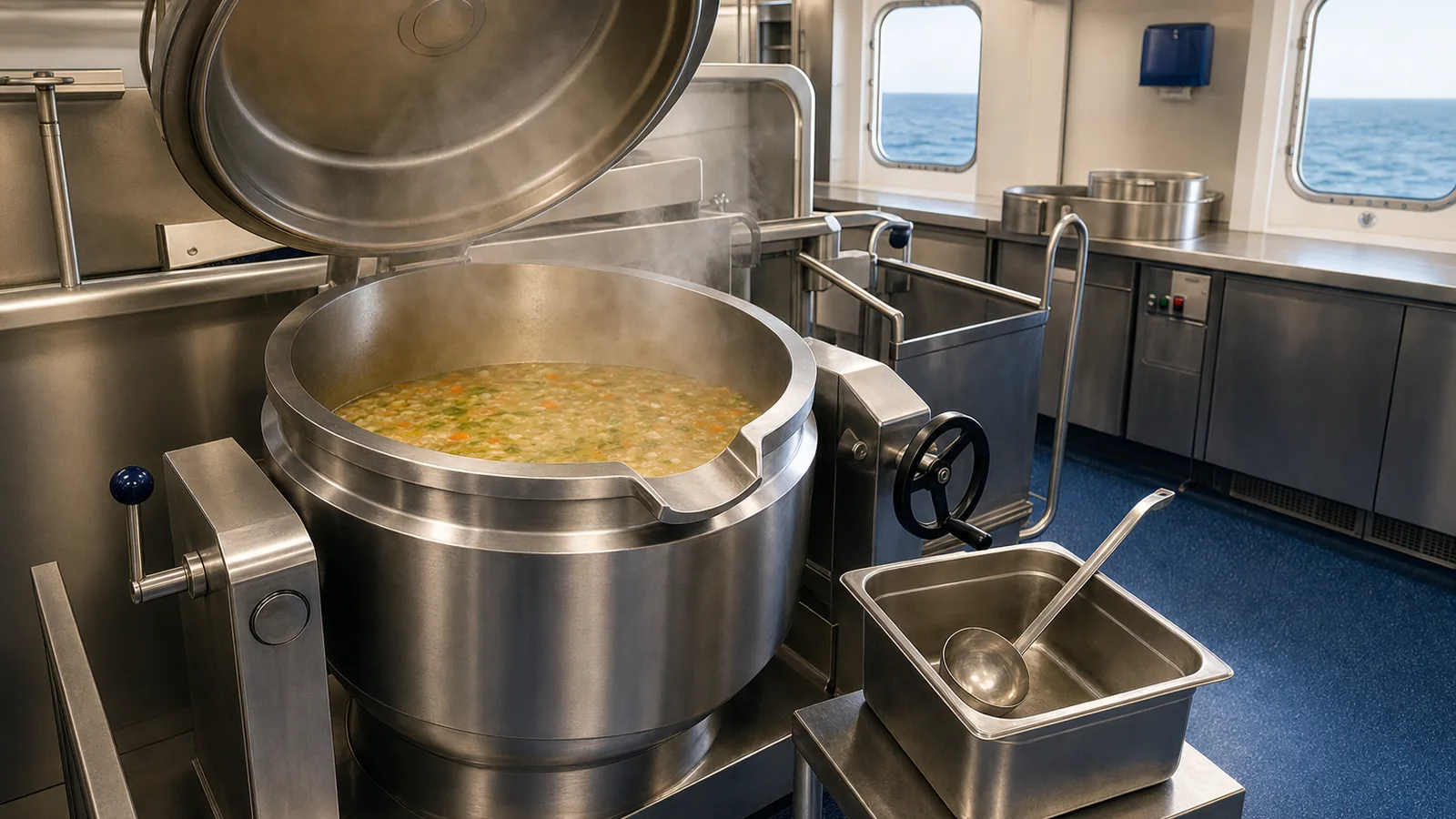
From 16 to 63 kW and 60 to 500 litres in the Optima 850 series, these MKN kettles are the workhorses of this page. The depth is fixed at 850 mm across the series, with widths from 800 to 2000 mm and net weights between 108 and 325 kg, so an entire line can be laid out on one datum with predictable deck loading. Every Optima 850 kettle that names a supply voltage lists 400 V.
Within the Optima 850 group the choice is between electric and steam boiling kettles and a full set of tilting variants. Capacity runs from 60 to 500 litres, so the same visual line can cover everything from sauce production to bulk stock. Drain valves, hinged lids, automatic water filling and energy‑management readiness are present on most of these units, with a significant share of the series built as tilting vessels for direct decanting.
Capacity and footprint planning across the range
Across all brands on this page the boiling kettles span 60 to 500 litres, with every listed product carrying a defined capacity. The bulk of the range sits between 60 and 200 litres, with a smaller group pushing into the 201 to 400 litre and over‑150 litre bands for outright volume cooking. That makes it straightforward to scale from a small crew galley up to a main galley on a commercial vessel without changing technology.
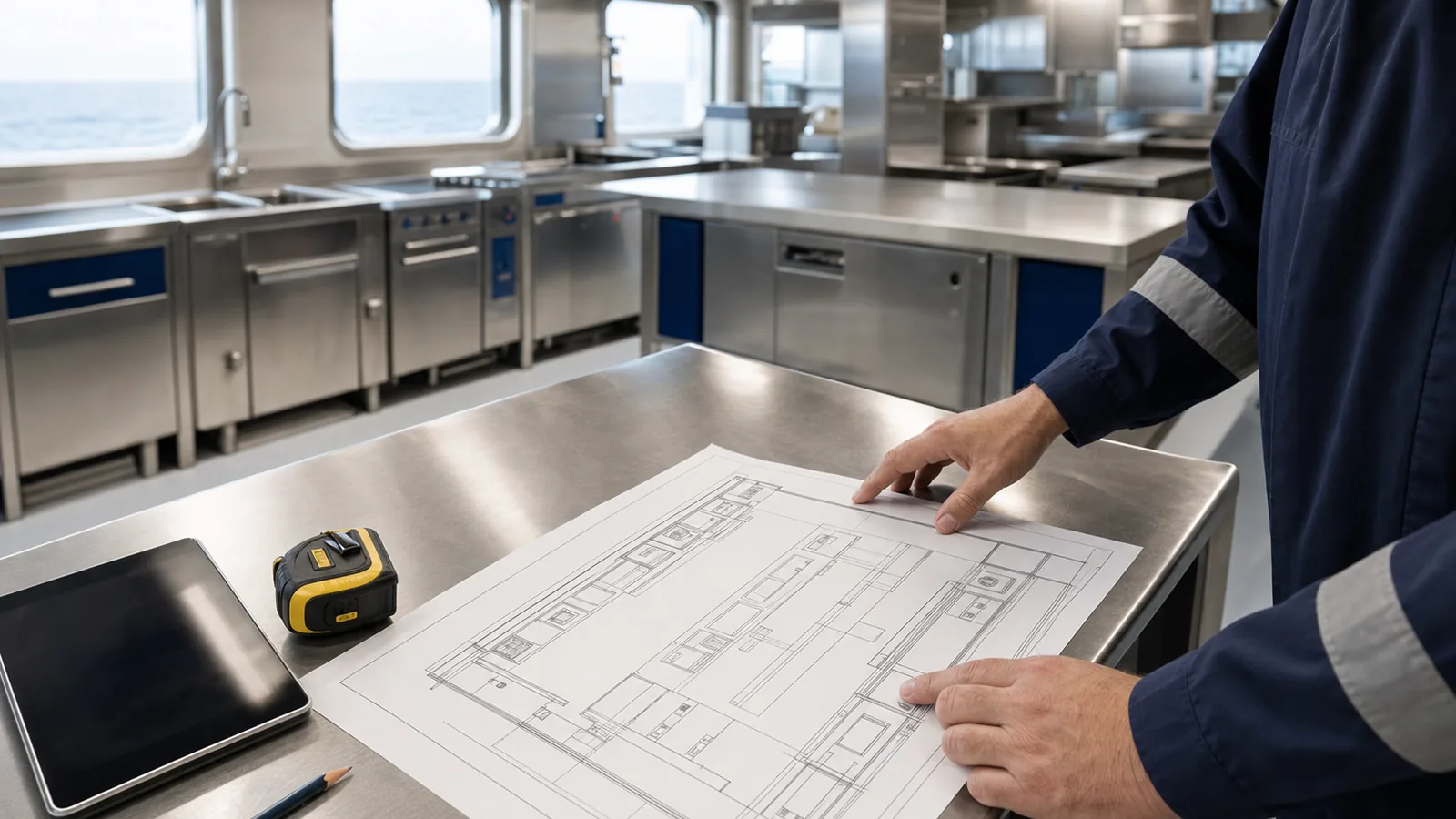
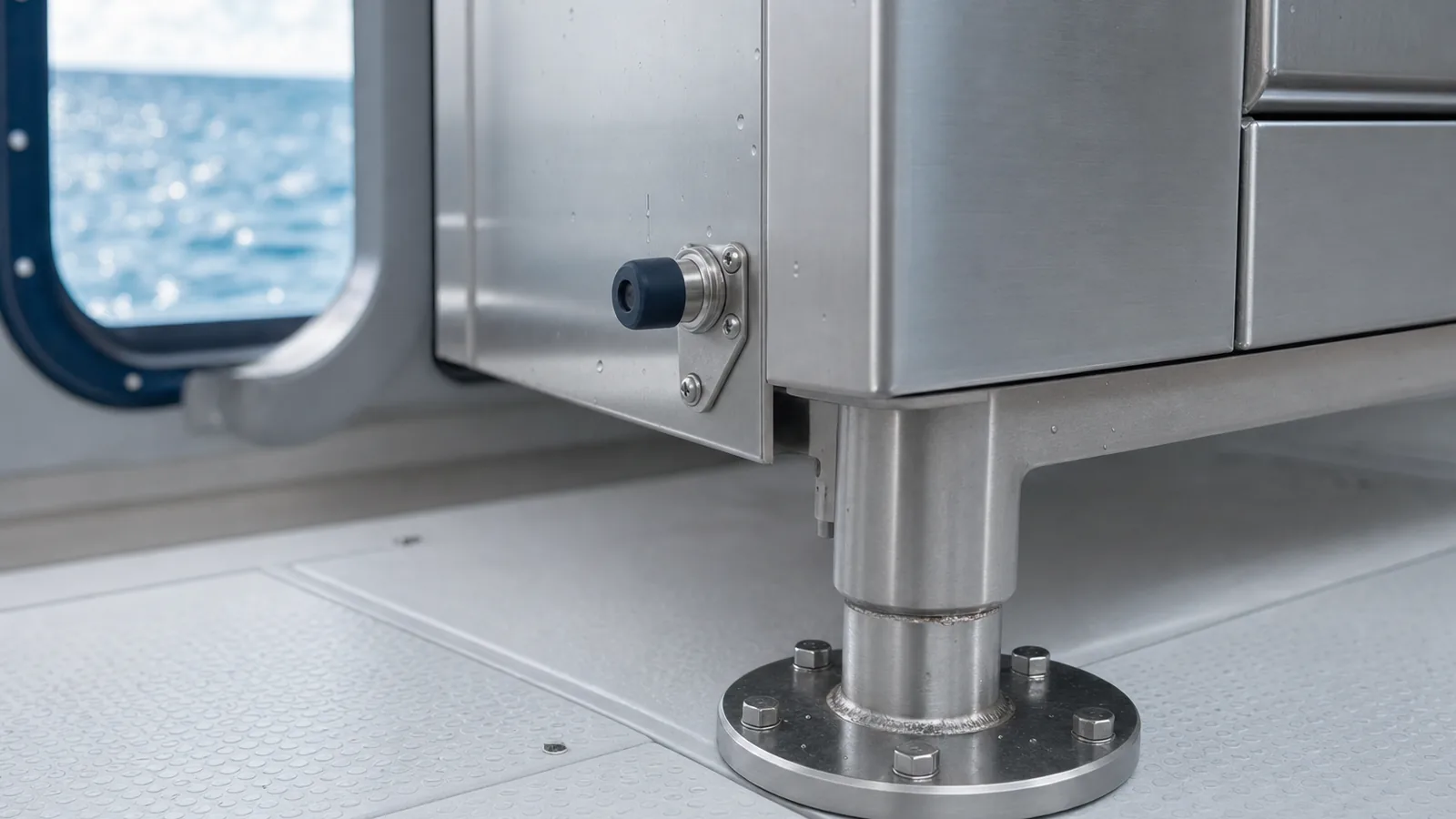
Footprints are consistent enough for line planning. Widths start at 800 mm and extend to 2000 mm, and more of the units sit above 1200 mm than below it. Depth is dominated by 850 mm bodies; only a single model on the page is built at 700 mm depth, which matters if the kettle has to sit in line with 700 mm modular cooking equipment from the sibling categories. Net weight across the catalogue runs from 100 to 430 kg, a spread technical departments can feed straight into deck loading calculations.
Choosing between electric, steam and tilting kettles
About two thirds of the listed kettles are electric and the rest steam‑heated, so the decision often follows the ship’s available services. Electric kettles on this page draw from 15.8 to 63 kW where figures are stated, and they sit mainly in the 20 to 40 kW power band, with a smaller set below and above that range. Steam boiling kettles avoid that electrical load but shift the requirement to a steam system instead.
Tilting matters where the galley runs bulk transfer into mobile containers. There are dedicated Tilting Boiling Kettle models and a wider group of kettles tagged as tilting vessels, including a block of 12 tilting boiling kettles by type. Motorised tilting is present on a defined subset of units, so it is worth checking whether a particular capacity and heating mode is offered with powered tilt or manual handling only.
Materials, controls and features that affect shipboard work
More than a third of the kettles on this page specify AISI 316L wetted parts, which is relevant where salt, acids and chlorinated cleaners will sit in the pan. An equal number list double‑jacketed construction, motorised tilting, core temperature probes, HACCP logging, programmable recipes and network connectivity, which is the part of the range to look at where production has to be temperature‑documented and supervised remotely.
Automatic water filling appears on a significant share of the range and takes some of the manual error out of large batch cooking, especially on the higher‑capacity units. Drain valves are common, but not universal, so drainage routing and deck sink locations should be planned against the specific model. A small number of kettles are tagged as washdown protected or with fully welded seams; those sit naturally in galleys where hose‑down cleaning is the norm, but most of the range does not carry that attribute in the data.
Electrical supply and installation form
Supply voltages named in the product records include 230 V, 380–415 V, 400 V and a single model at 440 V. Frequencies are split between 50 Hz and 60 Hz on the units that declare them, with some records not stating a frequency at all, so each kettle needs to be matched explicitly to the vessel’s distribution. Where the kettle will share a switchboard with thermaline 90 or XP cooking, the presence of a 440 V option in this category can simplify harmonisation.
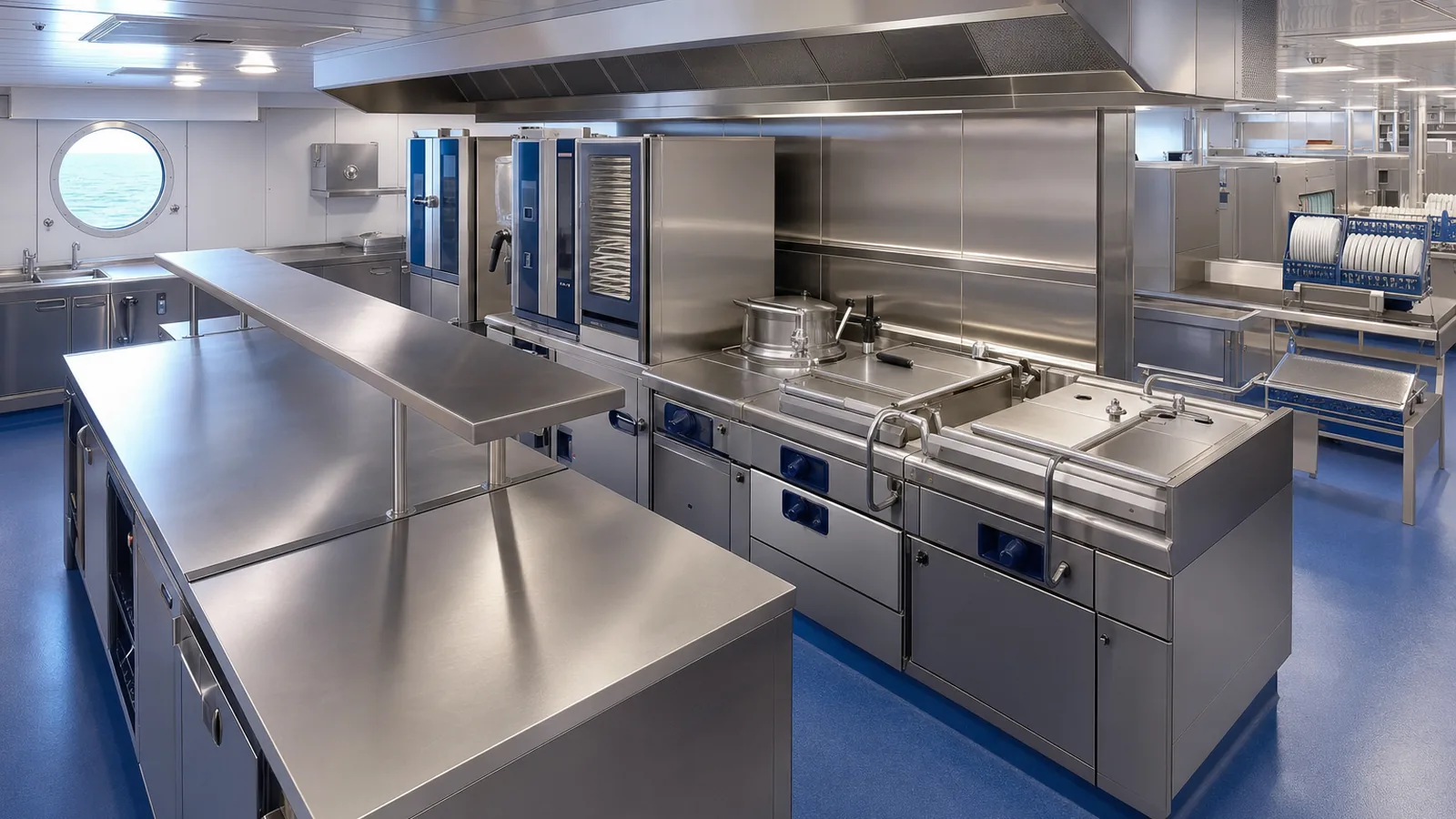
Most of the kettles here are floor‑standing, with freestanding models and a group of wall‑mounted kettles for galleys that want the deck clear beneath. The catalogue also distinguishes one‑zone kettles, notably the Optima 850 models, which simplifies control and aligns with galley layouts where the kettle is treated as a single‑purpose production station rather than a multi‑zone piece of equipment.
When to look at Bratt Pans or Neutral Units & Bases instead
This is the wrong section if the requirement is for shallow frying, griddling or pressure braising; those functions sit in the Bratt Pans and Grills & Griddles categories. Likewise, if the priority is worktop or storage rather than volume wet cooking, the Neutral Units & Bases category will be a better fit. Boiling kettles here start at 60 litres and are built around bulk liquid production; for direct‑serve lines, small‑batch finishing or regeneration, the Ovens and Induction Cookers categories usually give a neater solution.